Monday, February 27, 2006

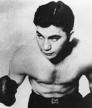
Barney Ross: The Saga Of The Tough Jew


This is reprinted from easily one of the best leftist blogs Unrepentant Marxist. Louis Proyect's story is similar to mine. My Jewish father grew up in a Mexican community in St.Paul, MN and joined a Mexican street gang in the 1930s. He also had a similar military background as Louis's father. Both Louis and I, received our political education from the Socialist Workers Party.

If you visit Unrepentant Marxist, see his hilarious David Horowitz post.

In the mid-1950s, my family lived in an apartment above the Kentucky Club, a nightclub catering to NY Jews who stayed at bungalow colonies and small hotels during the summer. Most of the acts were veterans of the Jewish stage like Molly Picon or Moishe Oysher but the biggest draw was the Jewelbox Revue, a group of men who performed in drag. One day I came home to find one of the performers in our living-room, where my mom was sewing some sequins on his costume as a favor. She nonchalantly introduced this charming Black man as "Miss Peggy", as he preferred to be called.

The Kentucky Club had hired famed ex-boxing champion Barney Ross as a "greeter" one summer, which one I can't exactly remember. But I do have vivid memories of spending time with him on the street corner in the evenings as he took a break from his duties. Resplendent in a tuxedo and puffing on a cigarette beneath a streetlamp, he cut a dashing figure. He was always happy to chat with me, as were many of the people at the Kentucky Club who treated me like their mascot.

Since that time, I have learned few details about Ross's life, other than the obvious fact that he was a Jewish boxer and that he had kicked a morphine addiction developed as a way of suppressing the pain of wounds suffered at Guadalcanal. His struggle was dramatized in the 1957 biopic "Monkey on My Back."

When I learned that a new biography of Ross by Douglas Century had been published, I would have bought it even if it were nothing but a standard sports biography. I was really curious about who Barney Ross was and how he compared to the image of him that lingered with me all these years.

"Barney Ross" is the third volume in a joint project of Schocken and Nextbook publishers called "Jewish Encounters" that seeks to promote Jewish literature, culture, and ideas. Although a biography of Barney Ross might be the last thing to expect in the same series of already released studies of King David and Maimonides (Moses, Spinoza and others to follow), Century does achieve a kind of monumentality. Century connects Ross not only to legendary figures that preceded him, like Daniel Mendoza the British Jew who was the champion of the London Prize Ring in 1792, but to a host of important cultural and political figures such as Saul Bellow, who came out of the same hardscrabble Chicago streets. Additionally, Century draws out all the interesting political and social implications of Barney Ross's amazing tendency to cross paths with controversial Jewish personalities from Irgunist Peter Bergson to Jack Ruby.

Beyond the interest that is sustained in Barney Ross as an individual, Century also addresses a phenomenon that is the subject of two earlier works by other writers, namely the "tough Jew." In considering Barney Ross and the Jewish boxer in general as an example of this phenomenon, Century contributes to a debate on the "Jewish Question" that will remain unresolved until contradictions between Jews and their ostensible antagonists are resolved on a higher level.

Dov Ber Raskofsky, who would assume the name Barney Ross after launching a career as a boxer, was born to Itchik and Sarah Rasofsky on the Lower East Side on December 23, 1909. Although his father had taught Hebrew back in Brest-Litovsk, he made a living as a small grocer. This was a trade he would continue once he arrived in the USA, following his departure in the aftermath of state-sanctioned pogroms in 1903.

Within two years of his birth, Ross and his family would depart for Chicago to take over a grocery store in the Maxwell Street ghetto, also the home of bandleader Benny Goodman, future Supreme Court Justice Arthur Goldberg, actor Paul Muni and William Paley, who would one day run CBS.

Maxwell Street was a poverty-stricken rat's nest that was a breeding ground for pneumonia, TB and diphtheria. It also bred many Jewish criminals, who, like the Jewish boxers of the time, were considered "tough Jews." This included Jacob Guzik, who was Al Capone's financial adviser and Samuel "Nails" Morton, who provided protection to Jewish businessmen against marauding gangs from other ethnic groups. In 1917 Morton was arrested for nearly beating to death several members of a Polish gang.

Barney Ross began running with young Jewish hoodlums at an early age and soon gained a reputation for being an effective street fighter despite his small size--his nickname was "Runt."

In 1923, Itchik Rasofsky was shot and killed by robbers in his store. Shortly afterwards, Barney Ross dropped out of high school and started hustling on the street. His younger two brothers and sister were put into an orphanage. Two years later, at the age of fifteen, he began hanging out at Kid Cross's gym where Jackie Fields (born Jacob Finkelstein) trained. Fields would win the gold medal at the Paris Olympic in 1924 before turning pro. In this period, it is estimated that 30 percent of all professional fighters were Jewish. Despite the deep prejudice against sports in general and especially fighting in the Jewish community, many men became boxers for the same reasons that Irish, Italian and Blacks would: to escape poverty. But other nationalities would not have to overcome the psychological hurdle created by a millennium of Jewish traditions. Century writes:

The Hungarian-born historian and sociologist George Eisen, who boxed as a young man in Budapest, has written of the "imperative to acknowledge that in the hierarchy of Jewish religious values, feats of physical prowess were invariably relegated to the 'secular' and the 'mundane.' There has always been a strong aversion in Jewish culture and tradition toward violent or blood sports that often were the hallmarks of neighboring tribes, societies and cultures." The antipathetic attitude toward sport goes back at least as far as the conquest of Judea by Alexander the Great in the fourth century B.C.E., when Jews were first exposed to the sports of boxing and wrestling. One of the more overt signs of Hellenization was the establishment in 174 B.C.E. of a gymnasium in Jerusalem where athletes engaged in sporting activities in the nude. According to the First Book of Maccabees, some Jewish participants even underwent medical procedures to conceal the fact that they were circumcised. The fact that all Greek games were dedicated to cults deemed idolatrous to Jews--gifts and sacrifices were made to the god Heracles in particular--exacerbated the sense that, for the observant Jew, sport was inextricably linked to the threat of a foreign, pagan culture.

Ross began training at Kid Cross's gym himself and also began to fight in Golden Glove tournaments, where he beat all opponents with ease. After turning pro, he fought a series of classic battles in the light and welterweight divisions against Tony Canzoneri and Jimmy McLarnin. Ross prevailed over these and lesser opponents until 1938 when he was defeated by Henry Armstrong, an African-American.

Fighting as a professional allowed Ross to get his siblings out of the orphanage and to buy a home for his mother. But in an all too familiar pattern, the rest of the money was pissed away on the kind of wastrel life-style that other champion boxers, including Mike Tyson, succumb to. Ross was the quintessential party guy who could be seen at popular nightspots every night of the week buying drinks for the house. Most of the money, however, went to feed what can only be called a gambling addiction. Ross was a permanent feature at the racetrack where he had an uncanny ability to bet on losing horses. His friend Al Jolson, also a big racing fan, once told him not to sit near him: "Stay away from me--I don't want to catch your poison." After beating Bobby Pacho on March 27, 1934, Ross blew his entire purse in a single day of betting.

Ross made no effort to hide the fact that he was an observant Jew but was uncomfortable with how the promoters turned every bout into a kind of ethnic rivalry. Along with Detroit Tiger baseball player Hank Greenberg, Ross was now the most famous Jewish athlete in the country. In the bout with Armstrong, sportswriters tried to exploit the fact that Ross's father's killers were Black and turn it into a race war. The articles angered Ross who had one of the writers booted out of his training camp at Grossinger's hotel in the Catskills, not far from my village.

For his part, Armstrong once commented "You can't Jim Crow a left hook." Long before Mohammed Ali, Armstrong was also writing poems. "In Contemplation of May 26" (the night of the fight) contained these lines:

Two fighters of oppressed races fighting each other
just like that
It doesn't seem exactly sensible or right
We're not mad at each other; we're just fighting for
the things we need
It comes right back, the same old thing--to live, man
must fight

After losing to Armstrong in a completely one-sided bout, Ross retired. He couldn't adjust to life outside the ring, however. He continued to piss money away on the horses and on nightlife but no longer had money coming in from fighting. His show business connections and fighting past made it easy for him to audition for a role as lead in Clifford Odets's "Golden Boy," a leftist play about a Jewish youth who has to choose between a career in boxing or playing the violin. He soon realized that even if this part was not far from his own life experience, delivering lines on the stage was more difficult than warding off Henry Armstrong's blows.

At the age of 33, Barney Ross inexplicably enlisted in the Marines. He needed special permission to join since he was far over the age limit, as well as being out of shape. Douglas Century believes this was motivated as much by Ross's lack of direction than by a gung-ho desire to fight. He ended up on Guadalcanal and in the midst of some of the fiercest fighting in the Pacific. On November 19, 1942, Ross was involved in a bloody battle that convinced him--according to an Esquire article he wrote later on--that "fighting wasn't a game." Century recounts the action that would lead to Ross being a decorated war hero and ultimately to morphine addiction:

He calculated the range of a Japanese machine-gunner. He didn't dare rise, so, lying flat on his belly, he lobbed three grenades in fast succession. The machine-gun fire halted. He crawled over to the trench in which Heavy Atkins and Freeman lay bleeding. He unhooked the grenades from their belts. As he crawled forward again, a mortar shell burst and shrapnel tore into his side, arm, and leg. In the darkness, he did his best to dress his own shrapnel wounds.

The low-hanging leaves began to patter with a hard rain. He gathered the rainwater and did his best to give Monak, Atkins, and Freeman a few drops to drink. The Japanese infantrymen were setting up at closer range, no more than thirty yards away. One of the infantrymen was struck again. A slug tore through Barney's left ankle and, screaming, he had to cut his boot away with his knife.

The pain was so intense that he felt himself losing consciousness. Delirious, feverish, shaking--he didn't yet realize he was suffering from the malaria that would plague him for years to come--he was convinced that if he blacked out he'd never awaken. He had twenty-two grenades--in some versions of the firefight it is twenty-one--and threw all except one, which he planned to hold in reserve should the Japanese soldiers storm into the foxhole, ready to die like Eliezar, baring his blade under the lead war elephant in 1 Maccabees.

Barney lay in the foxhole for some thirteen hours--a cruel "lifetime," he would later call it--watching over the wounded Marines and infantrymen. "I never expected to get out. I was crying, and praying, and shooting, and throwing grenades, and half the time, I guess, I was out of my head." Throughout the night he had comforted himself by repeating the Sh'ma Yisroel--"Hear O Israel, the Lord is God, the Lord is One." He prayed for himself, the wounded Marines and infantrymen, and "anybody else who was ready to die." In his delirium he saw the visage of a living dead man, bearded, in soiled apron, surrounded by paper sacks in the nameless grocery on Jefferson Street. "You have no idea how I talked to Pa throughout that night," Barney later told his brother George.

Ross would be treated with morphine in a military hospital. His misery was compounded by recurring bouts of malaria. Later he wrote in a memoir that "The morphine lifted me out of the snake pit and let me climb into the clouds." After returning to civilian life, he discovered that he could not do without it. He began to spend whatever money he had left after the gambling fiascos of years past on drugs. He later recalled, "I spent $250,000 on drugs in four years. Some of it was for buying silence. I paid through the nose." When he wasn't prowling around for his next fix, he was being feted at banquets as a war hero. In November 1944, he met with FDR for a Rose Garden ceremony. The President cited him for "his great personal courage and sincere devotion to his comrades."

Despite the battle he was fighting to kick the habit, Ross was still able to become active in something called the Emergency Committee to Save the Jewish People of Europe, which was led by Peter Bergson (née Hillel Kook). The committee sponsored a pageant titled "We Shall Never Die" at Madison Square Garden on March 9, 1943 that would go on to tour the country. The culmination was an all-star "Show of Shows" once again at the Garden that featured Bob Hope, Jimmy Durante, Paul Robeson, the Count Basie Orchestra and others. Ross bought tickets for 150 servicemen.

Despite his tireless work or perhaps because of it, Bergson became 'persona non grata' in official Jewish circles, if not considered a fascist. Since Bergson was affiliated with Jabotinsky's Irgun, this charge was not so far-fetched. According to George Raskofsky, Ross's younger brother who supplied valuable information to Douglas Century before his own death, Ross was involved in running guns to the Irgun. One time he discovered a cache of machine guns in his brother's closet and was told to look the other way.

Since rightwing Zionism of the sort associated with Jabotinsky has such a well-deserved bad reputation on the left, it might come as a surprise to discover that Peter Bergson comes off fairly well in chapter 24 of Lenni Brenner's "Zionism in the Age of Dictators". Unlike the Jewish establishment, Bergson was not afraid to rock the boat. Brenner quotes the December 12, 1942 issue of the Militant newspaper to explain why so little was done to resist the Holocaust:

"Truth to tell, these organisations, like the Joint Distribution Board and the Jewish Congress, and the Jewish Labor Committee, feared to make themselves heard because they were afraid of arousing a wave of anti-Semitism here as a result. They feared for their own hides too much to fight for the lives of millions abroad."

Yesterday I received the following from Lenni Brenner in reply to my query as to his view of Bergson's legacy:

Only one Zionist group understood that rescue had to be their priority during the Holocaust. Irgunist Peter Bergson realized that the US announcement of the gassing meant that they had to push Roosevelt to act. Ben Hecht, author and script-writer of Front Page, the classic 30s newspaper-man book and film, wrote a pageant, We Shall Never Die, bringing it into a full Madison Square Garden, March 9, 1943, and toured it to California.

Kurt Weill orchestrated the musical accompaniment. Edward G. Robinson and other film stars worked on it. A Trotskyist journalist complained that it was too pious and memorial. Indeed recordings of it sound ponderous to later ears. But that was the state of show biz political consciousness at the time. They did the best they could think of.

"The WZO forces were forced to organize a Garden event, to head off their rivals. Instead of uniting with Bergson, they pressured auditoriums in Pittsburg and other cities, who refused to rent to the pageant. Purblind hostility culminated in Nahum Goldmann of the World Jewish Congress, the international equivalent of Wise's AJCongress, going to Washington to demand action - against Bergson, not Hitler.

The WZO element did nothing to pressure Roosevelt to loosen rules restricting 30s German-Jewish immigration, and were incapable of self-starting in the time of castastrophe. The Irgunists, as terrorists, understood, at least for a time, that they had to act, in this case, to mobilize public opinion, or Roosevelt would do nothing.

In his later years, Bergson broke with Zionism, becoming a major voice in the chorus of its Israeli critics, and a vital source of information on America during the Holocaust. Goldmann never broke with Zionism, but his remorse for his role in that era is recorded in a later document.

(Brenner's observations were made in connection with a State Department memo about Bergson and his rivals.)

Throughout his life, Barney Ross would not allow public opinion to dictate who would be his friend or ally. If Peter Bergson was doing the right thing to agitate for the survival of European Jewry, he didn't care whether or not Bergson was on the a-list of prestigious Jewish organizations.

He felt the same way about Jack Ruby, a life-long friend he met during his hustling days on Maxwell Street. Ruby, of course, would eventually move down to Dallas and open up a strip club. Shortly after the arrest of Lee Harvey Oswald, Ruby entered Dallas Police Headquarters and shot Oswald to death. Ruby's mob connections have always suggested to some that the original plot against JFK was orchestrated by the Mafia rather than the CIA, let alone Soviet or Cuban spy agencies.

Ross was a character witness at Ruby's trial in what amounted to a lost cause. Another character witness, Hyman Rubinstein, Ruby's Warsaw-born older brother, testified that Jack had "hung around Barney Ross all his life. He liked Barney Ross. Everybody liked Barney Ross."


* * * * *


When Ross was undergoing detoxification at Lexington Hospital (more of a prison), he was crushed to discover that Hollywood had cancelled plans to make a movie based on his life. While it was one thing to make a rags-to-riches tale about a Jewish boxer who then becomes a war hero, drug addiction was still a taboo to depict on the silver screen. They did go on to make a movie based loosely on his life called "Body and Soul." There were so many obvious connections to the Barney Ross story that the studios were forced to cough up $60,000 to the boxer for what amount copyright infringements.

Since this was a film written, directed and starring a number of figures who would eventually be blacklisted in the 1950s and since it is regarded as a 'noir' classic, I watched it shortly after finishing Douglas Century's biography for comparison's sake.

The film was written by Abraham Polonsky, who was one of the Hollywood Ten and one of the industry's finest writers. In teaming up with director Robert Rossen, it was clear that two of the major talents on the left were joining forces. In his biography of Polonsky titled "A Very Dangerous Citizen," Paul Buhle describes Rossen's impressive past:

Rossen came with considerable personal as well as artistic baggage, the grandson of a rabbi and the nephew of a Hebrew poet, this sometime amateur boxer was raised on New York's Lower East Side. He began his theatrical career there, writing and directing a number of uccessful political plays in the thirties (including, in 1932, "Steel," produced by the Daily Worker as a fund-raiser) before coming to Hollywood. Rossen's script-writing high points included They Won't Forget (1937), a courtroom drama about a false accusation of murder in he South, with Lana Turner in her first dramatic role; Blues in the Night (1940), a musicians' saga with an extraordinarily strong and independent-minded woman played by Priscilla Lane; Sea Wolf {1941), arguably he best Jack London adaptation ever done, with Garfield as the proletarian, Ida Lupino as the hardened girl, and Edward G. Robinson as the totalitarian ship's captain (now noticeably fascist); Out of the Fog (1941), a proletarian saga from an Irwin Shaw play with Garfield as a hoodlum who nearly destroys the lives of a Brooklyn family (including Ida Lupino as the daughter, Garfield's sometime girlfriend trying to break away from her slum life) before fate gives them a second chance; Edge of Darkness (1943), a classic antifascist film marking Norwegian resistance against Nazi occupation; A Walk in the Sun (1946), perhaps the most realistic major war film to that time; and The Strange Love of Martha Ivers (1946), a taut postwar drama with Barbara Stanwyck as a factory owner hiding an old secret, Van Heflin as the childhood pal who comes back to wreck her, and Kirk Douglas, in his starring debut, as Stanwyck's weakling partner-in-crime.

John Garfield was born to play the role of boxer Charlie Davis. Like Rossen, Garfield (née Jacob Garfinkel) was a denizen of the Lower East Side who was an amateur boxer in youth and an early convert to the radical movement (although he would deny membership in the CPUSA when the witch-hunt was in full blast.) Like Ross, the character Charlie Davis is a Jew whose grocer father is killed in a stickup. Also, like Ross, he begins to piss away all his money once he becomes champion. Unlike Ross (but more like Jake LaMotta), Charlie Davis is tempted to take a dive in order to pay off debts and comply with the demands of Roberts, his crooked promoter. (Roberts is played by Lloyd Gough, who would be blacklisted. He eventually returned to work in the 1960s and played the role of a blacklisted writer in "The Front.")

Although "Body and Soul" incorporates many plot elements that at this point seem shopworn now (keep in mind that this film was one of the first to depict the rotten cash nexus that underlay professional boxing), Polonsky's writing will always remain fresh. In one memorable scene, the promoter offers a handout to Ben Chaplin, Charlie Davis's cornerman.

Chaplin is a Black boxer (played by blacklistee Canada Lee) who Davis had wrested the championship from and nearly killed in the process. Roberts had set up a bout between the two men despite knowing that Chaplin had a blood clot that might lead to a fatality in the ring. Not long after Chaplin is on the skids, Davis invites him to go to work in his corner.

When Chaplin declines Roberts's handout, the promoter throws the bills on the gym floor. After Roberts leaves, Davis picks up the bills and hands them to Chaplin with these words: "Go ahead and take it. It's only money. It doesn't think. It has no memory. It's not people." In these few words, Polonsky says more than a thousand leaflets. No wonder the redbaiters were anxious to throw such people out of work.

In 1952, columnist Ed Sullivan, who would go on to host the famous TV variety show that premiered Elvis and the Beatles and who started out writing for NY's socialist daily "Leader," identified "Body and Soul" as a threat to the burgeoning television industry. It set "the pattern that the Commies and their sympathizers in TV networks, agencies, and theatrical unions would like to fasten on the medium."

Charlie Davis's mom is played by Ann Revere, who would also be blacklisted. In a minor but crucial role, blacklistee Shimen Ruskin plays Shimen the grocer who drops in on Charlie and his mom shortly before the climactic fight of the movie, in which Charlie has agreed to take a dive. Shimen tells Charlie that he is so proud to see a Jew defending his title when it is such a dark time for his brethren in Europe. After Shimen leaves, Charlie complains that he isn't fighting for anybody any more and is only interested in a big payoff, even if that means taking a dive. Once the thirteenth round arrives, Charlie has a change of heart, fights like a lion and defends his title successfully. The film ends with the clear message that it is possible to withstand the cash nexus.

Despite the efforts of people Ronald Radosh (Red Star Over Hollywood: The Film Colony's Long Romance With The Left), there is little evidence of any sort of monolithism at work in the production of this film despite the fact that the principals were Communists. Rossen favored a tragic entry with Roberts having Charlie rubbed out as punishment for not taking a dive. Polonsky insisted on a happy ending. There were filmed versions of each ending, but Polonsky's was used. Buhle describes the artistic and political differences between the two:

The prospect of this Hollywood happy ending left director Rossen dissatisfied. He wanted Charley to be killed in revenge for betraying the boxing mob, and his version called for a final shot of Charley lying in an alley with his head in a garbage can. Both endings were shot. But in the collaborative atmosphere of Enterprise, where nearly all of the film workers on both sides of the camera were leftist comrades or sympathizers, the writer's view could prevail over the director's, at least if he had the artistic respect of both the producer and the star. Polonsky got his way.

Polonsky's insistence on using the closing scene of Body and Soul as he had written it, despite its superficially happy ending, was emphatically political. Charley's recognition of the need for a sense of decency in human affairs begins with the unmistakable suggestion that the boxing business had lynched Ben. Narratively and politically, Polonsky's need for a defiant ending with a shout of hope derives in part from the social context of Charley's awakening at the moment of Ben's "lynching" as expressed metaphorically in the swinging body bag.

With Rossen's ending, the only meaning in Charley's awakening is personal: Charley glimpses his likely future as a discarded fighter who dies penniless in the ring. His awakening is the American individualist's realization that it is time, in the lingo of another genre, to strap on his guns and clean up the gang that has taken over the boxing business. For Charley to die in a hail of bullets is entirely logical from that view. But that would be mere naturalism, little more than an inverted happy ending suited to the weary wisdom of the postwar audience, a knowing noir grimace.

*************************


When my father was a young man, people used to tell him that he looked like John Garfield. As I began looking deeper and deeper into Barney Ross, the movie based loosely on his life starring John Garfield, the more their images and lives began to blur with my father's.


Like Barney Ross and John Garfield, my father was the son of Yiddish speaking parents who came out of poverty. My father drove a truck in the late 1930s and joined the army for the same reasons that many men and women join today. It was a step up.

My father was also involved in combat during the Battle of the Bulge and received a Bronze Star for carrying an officer to safety while under attack by Nazi fire. He was also a heavy gambler, mostly poker, who was forced by my mother to quit. In their rocky 25 years of marriage, I sometimes wonder if he would have been better off if he had stayed in the army where he seemed right at home.

I was born when my father was off in Belgium dodging German bullets. When he returned, I was nearly six months old. Like many fathers whose children are born when they were overseas in the service, he never really bonded with me. As I grew older into a combination of Woody Allen and Stephen Dedalus, he grew even more remote. As a "tough Jew," he had trouble relating to somebody so different and perhaps effete.

In his Afterword, Douglas Century reflects on the "tough Jews" in his own family:

From 1940 through the late 1960s, my mother's family was in the restaurant business. They owned a popular twenty-four-hour delicatessen called S&L--for my grandfather, Willie (Velvel) Smith, and my uncle, Abe Levy--located on Kedzie and Lawrence avenues in Albany Park. By the time I was old enough to visit Chicago, the family had sold the "store" and all that remained were a few black-and-white photographs, receipts for corned beef sandwiches and 10-cent chocolate phosphates, and Uncle Abe's stories of obsessive gamblers, cops on the take, and young draftees bound for combat in Europe and the Pacific.

They were the characters from Barney Ross's world, and my uncle--born one year after Barney, in 1910, on Manhattan's Lower East Side--could summon them like smoke-shrouded genies in his den in West Rogers Park. He told me about Jewish gangland characters who had dressed in police uniforms--procured by a certain Captain Shapiro at the Albany Park precinct--in order to go pick up a visiting Nazi official who was coming to Chicago to address the Bund; the Jewish police "escort" met the Nazi at the train station, drove him to a secluded street, beat him half-dead with pipes and baseball bats and sent him back to Germany. He told me about one pathetic gambler who won a small fortune with the bookies across the street from the restaurant, wooed and wed the sexiest woman in Albany Park, and promptly lost everything--his gleaming car, furnished apartment, and glamorous wife--when his lucky streak deserted him.

By the mid-seventies, when I was a boy, my uncle was out of the restaurant business and had returned to his original career--for which he'd been trained in the 1920s in Staten Island--as a pharmacist. His den was filled with mementos from his stint as a pharmacist in the United States Army during the second world war, his staff sergeant's stripes, Asiatic-Pacific campaign ribbon with four bronze campaign stars denoting service in New Guinea, Leyte, Luzon, and Hollandia, and the Philippine Liberation Ribbon. There were photos of Abe and his buddies posed in the jungle of Corregidor, my uncle holding a bazooka and a friend hanging from the barrel of the largest artillery gun I'd ever seen.

To Century's credit, he does not take the conventional approach to answering the question of where all the "tough Jews" have gone. Obviously, there are no professional boxers today, except for a smattering of Russian immigrants who differed very little from their gentile counterparts in the former Soviet Union. Nor are there are Jewish gangsters, although there are a whole slew of crooks from Jack Abramoff to the neoconservatives who broke international law in the course of invading Iraq.

This, of course, leads to an examination of the role of Israel in creating a new "tough Jew" archetype based on figures such as Moshe Dayan or Ariel Sharon. Israeli paratroopers are certainly as brutal as any Chicago gangster, although the turf they are protecting has less to do with protecting meek shopkeepers than it does in building a sub-empire in Arab homelands.

There are two books with "tough Jew" in the title. Paul Breines's "Tough Jews: Political Fantasies and the Moral Dilemma of American Jewery" appeared in 1990 and Rich Cohen's "Tough Jews: Fathers, Sons, and Gangster Dreams" appeared 8 years later.

In a review of Breines's book that appeared in the Washington Post on September 23, Edward W. Said wrote:

In this remarkably interesting and suggestive essay in cultural analysis, Paul Breines shows how after the 1967 Arab-Israeli War the image of the Jew in American popular culture as a gentle, meek and even saintly figure changed dramatically. The new image to emerge was that of a tough and lethal fighter, one prepared to do battle with hostile non-Jews -- Arabs usually -- who are equated with Nazism and anti-Semitism. Breines connects this change directly with the politics of Israel and Zionism, arguing subtly that the new image was addressed paradoxically to non-Jews who had rejected anti-Semitism; the tough Jew image foreclosed the options culturally available to outsiders who were now to be confronted almost exclusively with the Jew as a savage macho fighter. This figure's origins in the 20th century were to be found in people like Vladimir Jabotinsky, patriarch of the Revisionist Zionism that has lately brought Menachem Begin and Itzhak Shamir to unchallenged prominence in contemporary Israel.

Breines claims that the change in image derives from a change in attitudes to the body, once conceived of as weak and unimportant, now transformed by history and fantasy into an all-encompassing and threatening muscularity. The irony, says Breines, is that the tough Jew now peopling the novels of Leon Uris, Ken Follett, Howard Hunt, John Fredman, Marge Piercy and others (not an impressive roster of talents) is connected exclusively to Israeli tough guys: in a compact chapter, "From Massada to Mossad," he presents an alternative historical record of Jews as warriors, gangster and the like. "In reality," he says, "Jewish Americans did not need Zionism and Palestine to demonstrate Jewish toughness in the period before 1948." Jews were historically tough and gentle, depending on the circumstances.

Cohen's book is more narrowly focused. He is exclusively interested in Jewish gangsters like Bennie "Bugsy" Siegel, Meyer Lansky and Dutch Schultz. In a July 8, 1998 Washington Post review, Jonathan Groner writes:

But Cohen wants to tell us about the Jewish gangsters, not the Jewish intellectuals or the Jewish businessmen, and is he ever proud of those gangs. To him, the criminals -- notorious national figures like Arnold Rothstein, Meyer Lansky and Louis Lepke, as well as countless anonymous street-corner thugs -- were role models of a sort, symbols of the notion that the People of the Book can be doers, not just thinkers. Never mind what kind of actions they took: They were men of action, to be admired, at least for that.

"As bad as the gangsters were, as far outside the law as they lived, they thought they were, in some way, more in touch with Jewish experience than uptown Jews like the Schiffs," Cohen writes presumptuously. Or: "The fact that they were gangsters, that they operated beyond the law, past what is acceptable, gave them a kind of legitimacy, the instant credibility of the outsider."

As difficult as it would have been for someone like me to have made a career as a boxer or a professional hit-man, there is still a way to maintain some kind of connection with the best traditions of the "tough Jew." As a long-time radical, I too know what it means to feel outside the law. During World War Two, the leaders of the Socialist Workers Party were sent to prison for violations of the Smith Act. At Sandstone Prison, party leader James P. Cannon would get into conversations with other prisoners who were mystified why these men were in prison. If you were going to end up behind bars they argued, you might as well do something that at least has a payoff worth the risk--like robbing a bank. Cannon's response went along the lines that the socialists weren't interested in a bank or two. They wanted the whole thing! I always chuckle when I think about that response. Deep in my heart, I believe that being a revolutionary in the USA makes you the biggest criminal that ever lived. Bigger than Robin Hood even. That's the kind of toughness that this Jew at least wants to embrace.


RENEGADE EYE

Friday, February 24, 2006

Sectarian violence engulfs Iraq following mosque bombing

“Riverbend”, a young Sunni secular woman in Baghdad, wrote yesterday: Tensions...

Things are not good in Baghdad.

There was an explosion this morning in a mosque in Samarra, a largely Sunni town. While the mosque is sacred to both Sunnis and Shia, it is considered one of the most important Shia visiting places in Iraq. Samarra is considered a sacred city by many Muslims and historians because it was made the capital of the Abassid Empire, after Baghdad, by the Abassid Caliph Al-Mu’tasim.

The name “Samarra” is actually derived from the phrase in Arabic “Sarre men ra’a” which translates to “A joy for all who see”. This is what the city was named by Al-Mu’tasim when he laid the plans for a city that was to compete with the greatest cities of the time- it was to be a joy for all who saw it. It remained the capital of the Abassid Empire for nearly sixty years and even after the capital was Baghdad once again, Samarra flourished under the care of various Caliphs.

The mosque damaged with explosives today is the “Askari Mosque” which is important because it is believed to be the burial place of two of the 12 Shia Imams- Ali Al-Hadi and Hassan Al-Askari (father and son) who lived and died in Samarra. The site of the mosque is believed to be where Ali Al-Hadi and Hassan Al-Askari lived and were buried. Many Shia believe Al-Mahdi ‘al muntadhar’ will also be resurrected or will reappear from this mosque.

I remember visiting the mosque several years ago- before the war. We visited Samarra to have a look at the famous “Malwiya” tower and someone suggested we also visit the Askari mosque. I was reluctant as I wasn’t dressed properly at the time- jeans and a t-shirt are not considered mosque garb. We stopped by a small shop in the city and purchased a few inexpensive black abbayas for us women and drove to the mosque.

We got there just as the sun was setting and I remember pausing outside the mosque to admire the golden dome and the intricate minarets. It was shimmering in the sunset and there seemed to be a million colors- orange, gold, white- it was almost glowing. The view was incredible and the environment was so peaceful and calm. There was none of the bustle and noise usually surrounding religious sites- we had come at a perfect time. The inside of the mosque didn’t disappoint either- elaborate Arabic script and more gold and this feeling of utter peace… I’m grateful we decided to visit it.

We woke up this morning to news that men wearing Iraqi security uniforms walked in and detonated explosives, damaging the mosque almost beyond repair. It’s heart-breaking and terrifying. There has been gunfire all over Baghdad since morning. The streets near our neighborhood were eerily empty and calm but there was a tension that had us all sitting on edge. We heard about problems in areas like Baladiyat where there was some rioting and vandalism, etc. and several mosques in Baghdad were attacked. I think what has everyone most disturbed is the fact that the reaction was so swift, like it was just waiting to happen.

All morning we’ve been hearing/watching both Shia and Sunni religious figures speak out against the explosions and emphasise that this is what is wanted by the enemies of Iraq- this is what they would like to achieve- divide and conquer. Extreme Shia are blaming extreme Sunnis and Iraq seems to be falling apart at the seams under foreign occupiers and local fanatics.

No one went to work today as the streets were mostly closed. The situation isn’t good at all. I don’t think I remember things being this tense- everyone is just watching and waiting quietly. There’s so much talk of civil war and yet, with the people I know- Sunnis and Shia alike- I can hardly believe it is a possibility. Educated, sophisticated Iraqis are horrified with the idea of turning against each other, and even not-so-educated Iraqis seem very aware that this is a small part of a bigger, more ominous plan…

Several mosques have been taken over by the Mahdi militia and the Badir people seem to be everywhere. Tomorrow no one is going to work or college or anywhere.

People are scared and watchful. We can only pray.


See: Baghdad Burning

RENEGADE EYE

Wednesday, February 22, 2006

Tag: I'm It.


The Blogworld as I know it changed this evening... I've been tagged! It was inevitable... you blog... you become friends with fellow bloggers.... and ZONK!!! they get you when you're not looking.
DesertPeace did it to me... So now I'm obligated to tag four others....
But first I have to answer the following questions... then I'll name the four I'm tagging. They will have to answer the same questions... and tag four other bloggers. This should be done on their own site... but link me to it when you do...
So... here goes... the questions;

1: Black and White or Color; how do you prefer your movies?
Color because black and white is for newsprint.

2: What is the one single subject that bores you to near-death?
Nothing bores me.

3: MP3s, CDs, Tapes or Records: what is your favorite medium
for prerecorded music?

CD's

4: You are handed one first class trip plane ticket to anywhere in the world and ten million dollars cash. All of this is yours provided that you leave and not tell anyone where you are going … Ever. This includes family, friends, everyone. Would you take the money and ticket and run?
I'm off to Argentina.

5: Seriously, what do you consider the world’s most pressing issue now?
The clash for resources.

6: How would you rectify the world’s most pressing issue?
Permanent revolution.

7: You are given the chance to go back and change one thing in your life; what would that be?
I would have learned to play a trumpet.

8: You are given the chance to go back and change one event in world history, what would that be?
Too many choices to answer.

9: A night at the opera, or a night at the Grand Ole’ Opry –Which do you choose?
Give me Carmen.

10: What is the one great unsolved crime of all time you’d like to solve?,
Who killed Marilyn Monroe (suicide?).

11: One famous author can come to dinner with you. Who would that be, and what would you serve for the meal?
Isabel Allende; fresh fish, brown rice and Chili salad.

12: You discover that John Lennon was right, that there is no hell below us, and above us there is only sky — what’s the first immoral thing you might do to celebrate this fact?
Anything I wouldn't get caught for.

OK, so time to tag 4 other people. Well, here goes, and everyone check these blogs out, they’re all great..

  • Molara Wood


  • the beatroot


  • Annotated Life


  • fuzzy and blue --political musings by a proud Democrat


  • RENEGADE EYE

    Sunday, February 19, 2006

    Tulsa OK 1921: US Government Bombs US City


    National Guard troops patrolling the streets armed. Thousands of black people held in a convention center. Hundreds of black dead, with bodies piled like wood. That was not New Orleans, that was Tulsa, Oklahoma, in June 1921.

    On May 30, 1921 a young black man named Dick Rowland, stumbled into a white woman, while entering an elevator. He was accused of assault, and arrested the next day. Newly rich from oil Tulsa, was a Ku Klux Klan town. Rowland was sentenced to be hanged. The Tulsa Tribune called for a "Negro lynching tonight."

    The white mob was surprised when they were met by several dozen armed black men, dressed in their World War I uniforms. This led to a racist three day destruction of the black neighborhood of Greenwood. The Red Cross reported 300 mostly dead black people.

    Greenwood called "Little Africa," was a relatively wealthy community. White mobs, many deputized, destroyed every house, store, church or school. The mob met resistance from an armed black population. Governor Robertson declared martial law. The National Guard arrived with machine gun mounted trucks, and airplanes hovering over Greenwood. It was the first time an American city was bombed from the air, by the US government.

    Over 6,000 black people, were round up and held in the convention center and fairgrounds, as long as eight days. The homeless were shuttled into a tent city, where typhoid and malnutrition took over. Blacks were allowed out of the convention center, with a tag, with an employers name. Thosands fled the city.

    Attempts to turn Greenwood into an industrial zone were unsuccessful. For several years, it was deprived of paved streets, running water, and garbage collection.

    See: Tulsa Reparations Coalition and thank you to Internationalist Group for presenting this story in your newspaper.
    RENEGADE EYE

    Saturday, February 18, 2006

    A Jessica and Ashlee Simpson Moment of Diversion


    "They're everything wrong with culture, and
    everything wrong with art." - David LaChapelle,
    on Jessica and Ashlee Simpson.


    A moment away from torture pictures and racist cartoons.RENEGADE EYE

    Thursday, February 16, 2006

    New Abu Ghraib Photos Surface


    These new pictures were released by an Australian TV show on SBS, Wednesday February 15th. The tone of the show was as, "These are the pictures the US doesn't want you to see."

    Around the blogosphere, the discussion is about the timing. Another provocation against Muslims?

    The best that can come from these photos, is pressure for indictments at higher levels.

    I posted these pictures, but not the cartoons. I supported the freedom of the press to print both. I made a value judgement.

    Hitchins is right that Abu Ghraib's better now than when under Saddam. I said that before it is repeated to me. That said on with the discussion.

    Sunday, February 12, 2006

    Pentagon Planning Military Scourge Against Iranian Nuclear Sites


    Strategists at the Pentagon, are planning bombings of Iran's nuclear sites, followed by submarine launched missile attacks, if diplomacy fails to stop Iran gaining an atomic bomb. This was uncovered in an article in the UK Telegraph.

    I think both the US and Iran are using exactly the same strategy. It was done by Richard Nixon, during negotiations during the Vietnamese war. Make your opposition believe they are dealing with one crazy SOB, who'll use any tactic. This is a strategy to get concessions.

    The US doesn't have the support of the UK on this. Prime Minister Tony Blair believes it would increase Islamic discontent around the world, and destroy any chance of diplomacy. The Oxford Research group in a study called Iran: Consequences of a War concluded, "A military response to the current crisis is a particularly dangerous option and should not be considered further. Alternative approaches must be sought, however difficult these may be." The fighting of a ground war after the bombing would require an additional 100,000 troops. The fighting would involve Israel, Lebanon and various Gulf States. The report predicted 10,000 Iranian scientists and technicians would die in the bombings.

    In a similar briefing before the invasion of Iraq in 2003, the Oxford group predicted that Saddam Hussein's regime could easily be overwhelmed but that the country would become a hotbed of insurgency.

    al-Sadr, a powerful Iraqi Shiite leader, with his own militia, was in Iran last week to express solidarity against a US or Israeli invasion.

    This policy is not only a Rumsfield plan. It has bipartisan support.
    RENEGADE EYE

    Thursday, February 09, 2006

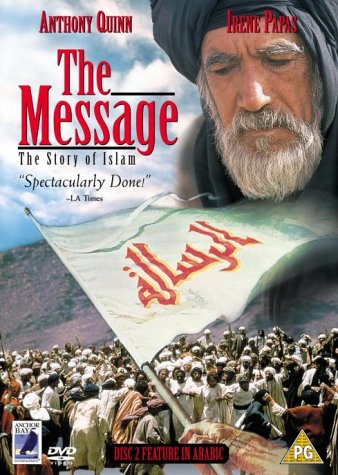
    The Message (1976): A backdoor discussion.


    There never was a Muslim equivalent to a movie as The Greatest Story Ever Told, or even an Islamic Mel Gibson. Syrian Born movie director Muslim American Moustapha Akkad, in 1976 tried to fill the void.

    Mohammad was never visible on screen. The camera was his eyes. A biopic starring The Invisible Man. It was rumored in the Islamist world, Anthony Quinn was playing Mohammad.

    In March, 1977, Black Muslims in the US took 149 people hostage and demanded that The Message be banned. The siege ended with one reporter dead and loads of hostages beaten, stabbed or shot.

    Quotes
    Abu Sofyan: Mohammed, there is still doubt in my heart.
    Khalid: If we were to cut off your head, it would remove all your doubts.


    The movie was nominated for an Academy Award for its soundtrack.

    The bottom line is we must defend free speech. George Bush's recent criticism of the Danish cartoons, rather than defending artistic and journalistic freedom, shows his priorities. No compromise on the right to print unpopular opinion.

    Hat trick to great Polish blog the beatroot. It is a great read.


    RENEGADE EYE

    Monday, February 06, 2006

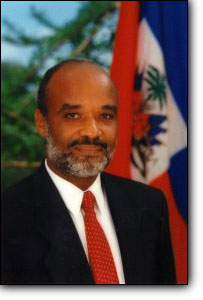
    Rene Garcia Preval favored in Haiti's Election.


    A CID-Gallup poll from December 2005, shows Rene Garcia Preval, the former prime minister for six months under Aristide's first administration before a brutal military coup in September 1991. An agronomist educated in Europe, he is also a former president of Haiti whose term ran from 1996 to 2001. He is ahead with 37% of the vote. His nearest competitor is with 10% of the vote is Charles Henry Baker,a wealthy sweatshop owner and a co-founder of the Group 184, a so-called civil society organization that helped to overthrow Aristide and was heavily funded by the United States, France and Canada through an intriguing web of foreign non-governmental organizations (NGO's). There are over 30 candidates running for the presidency.

    The supporters of Preval, come from the same base that supported the ouster of Jean Bertrand Aristide. A study conducted by Aristide opposition National Organization for the Advancement of Haiti (NOAH), shows 51% of the population, would welcome Aristide as a private citizen. The CID-Gallup election poll, inadvertantly, showed the support of Aristide's ouster was an illusion. Aristide had the support of the rural poor and city slum dwellers.

    The main reason for stagnation in Haiti is not government spending, or inflation. It was lack of assistance. After Aristide refused to privatize state-owned enterprises, the US cut off assistance.

    Under Aristide Haiti for the first time developed universal schooling. The budget went from 68% to 72%. More schools were built from 1994-2000, then between 1804-1994. A literacy program was developed.

    More money went for healthcare than any previous government. It developed a lauded AIDS education program. The country received health professionals from Cuba.

    I can go on and on with statistics, to show a progressive government was overthrown.

    The US called for Aristide to privatize the telephone company, electricity company, three banks, a cement factory and a flour mill. He only privatized the last two on the list.

    Voting booths are almost non-existent in the slum areas, making voting hard for several hundred most likely supporters of Preval. I believe you need over 51% of the vote in Haiti, or face runoff. Expect the anti-Preval forces, with US and French support, try to influence the election through NGOs.

    I enjoy kiskeyAcity a blog that covers Haitian and Caribbean cultural issues. I hope you'll visit it. See also HaitiAction.

    Note: This post is written before the election results are tallied.RENEGADE EYE

    Friday, February 03, 2006

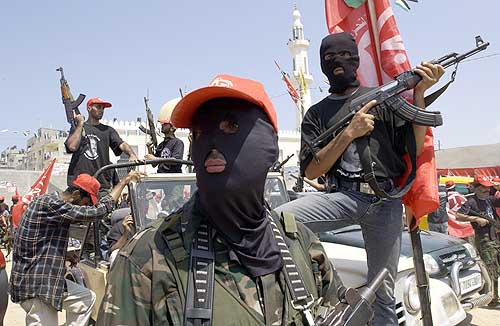
    Hamas: Suicide Voters.


    Christopher Hitchens in the January 30 2006 issue of Slate, wrote an analysis of the Hamas win in the Palestinian Authority election.

    Hitchens wrote: "Almost all our commentary on the Israel-Palestine dispute is unconsciously ethnocentric and practically every paragraph on the Hamas election victory has followed this bias by asking what it means either for the Israelis or for the "peace process." It might be worth just thinking about what it could mean for the Palestinians.

    The preferred analysis, which certainly derives from a kernel of fact, is that the vote represents a repudiation of the baroque corruption of the Arafat gang (which was so brilliantly anatomized by David Samuels in the Atlantic of September 2005). But there are at least two difficulties with this comforting conclusion. For one thing, anyone voting for a clerical party in the hope of abolishing corruption is asking to be considered a fool and also treated as one: There is corruption all over the Middle East, but it is nowhere as flagrant and exploitative and damaging as in the region's two main theocracies, Iran and Saudi Arabia. Those who come to power as puritans lose no time in becoming positively gorgeous in the excess of their corruption, and Hamas will not be an exception to this rule.

    There is also an element of condescension in the "corruption" explanation. Hamas says that it wants an Islamic state all the way from the Jordan to the Mediterranean. It publishes and promulgates the Protocols of the Elders of Zion. Why not assume that it is at least partly serious about all this? For years, the PLO leadership has been at least officially committed to a two-state solution and has at least officially made a distinction between Judaism and Zionism. It has also renounced the disgusting tactic of suicide murder. The emergence of a party that considers all of these evolutions as betrayals may have to do with something more than the provision of welfare. I am uncomfortably reminded of the tripe talked by many liberals and leftists about the Khomeini revolution in Iran in 1979, where it was said that religion was merely the form that protest against the corrupt and repressive shah happened to take, and that the mullahs could be contained."


    There was a time when Fatah was a working part of the left. I remember during the 1970s, leaders of Fatah's Central Command, met with American leftists, often privately, explaining their positions, and soliciting political support. I know this because I was at such a meeting. Fatah always differentiated Zionism from Judaism.

    I think you should read the article Hitchens on Hamas. It is a good starting point for a discussion of the issues facing that part of the world. I found this article generally thought positively on rightist blogs. I think the message is for the left.

    Hitchens was invited as a speaker at a GOP Zionist conclave, that was cancelled. The Zionists were opposed to Hitchens speaking there.

    Sunday, January 29, 2006

    US Government Through the National Endowment for Democracy Funnels Millions of Dollars to Influence Haitian Elections


    About two years after the overthrow of Aristide in Haiti, the nation will hold national elections next month. The top candidate is pro Aristide candidate Rene Preval.

    The National Endowment for Democracy was set up in the early 1980s under President Reagan, in the wake of all the negative revelations about the CIA in the second half of the 1970s. The latter was a remarkable period. Spurred by Watergate-the Church Committee of the Senate, the Pike Committee of the House and the Rockefeller commission, created by the president, were all busy investigating the CIA. Seemingly every other day there was a headline about the discovery of some awful thing, even criminal conduct, the CIA had been mixed up in for years. The Agency was getting an exceedingly bad name, and it was causing the powers-that-be much
    embarrassment.

    Something had to be done. What was done was not to stop doing these
    awful things. Of course not. What was done was to shift many of these
    awful things to a new organization, with a nice sounding name-the
    National Endowment for Democracy. The idea was that the NED would do
    somewhat overtly what the CIA had been doing covertly for decades, and
    thus, hopefully, eliminate the stigma associated with CIA covert
    activities. It is a way to launder funds, that would formerly go to the CIA, to a non government agency (ngo).

    The Endowment donated a quarter-million dollars of taxpayers' money to the Cuban-American National Fund, the ultra-fanatic anti-Castro Miami group. The CANF, in turn, financed Luis Posada Carriles, one of the most prolific and pitiless terrorists of modern times, who was involved in the blowing up of a Cuban airplane in 1976, which killed 73 people. In 1997, he was involved in a series of
    bomb explosions in Havana hotels.

    The NED operates with an annual budget of $80 million dollars from U.S. Congress and the State Department. In Venezuela, it's given money to several political opponents of President Hugo Chavez. With elections underway in Haiti, it's reportedly doing the same to groups linked to the country's tiny elite and former military.

    It was exposed last month that an Associated Press reporter, funded by NED, was sending reports from Haiti. She has since been terminated.

    According to Canadian Journalist Anthony Fenton, who has written a new book Canada in Haiti: Waging War on the Poor Majority, "So you see this family meeting on a weekly basis, coordinating their activities. They’re funneling millions of dollars to the political parties, by way of giving them credits for TV advertising, for pamphlets, for t-shirts and all sorts of other activities. And, of course, this is all geared towards -- they're hoping, I think, right now, that there will be a run-off election, sort of like there was in Liberia, where the International Republican Institute and these other organizations played a central role, as well, because if there’s a run-off election -- and it’s possible that one of their rightwing candidates, perhaps such as Marc Bazin, who's running under the Lavalas name today, but of course was a World Bank candidate that Aristide beat in a landslide in 1990 -- they're hoping that one of these candidates, maybe it'll be Henri Baker, will be able to win in a run-off."

    For more info see: Democracy Now, Le Colonal Chabert and No Simple Matter. RENEGADE EYE

    Wednesday, January 25, 2006

    Argentine Tango: Etiquette


    To experienced dancers, the following guidelines of Tango dance protocol and etiquette are usually well known, but not often discussed. Also following these guidelines sets a good example for other dancers. For new dancers, it's good to know what's what to help avoid embarrassing, awkward, or unsafe situations. In any case, following these guidelines can help to maximize your Tango dance experience.

    1. At a Tango milonga (a Tango dance party), couples dance Tango in a "line-of-dance" fashion, counter-clockwise around the dance floor. The faster "lanes" are those toward the outside of the counter-clockwise line-of-dance. The slower "lanes" are toward the center. As you dance, refrain from cutting across these lanes, cutting through the center, and dancing backward to the line-of-dance especially on a crowded dance floor.

    2. If you are not dancing, show respect to those who are by not walking through the busy dance floor and by staying clear of the dance space. For example, while others are dancing, do not stand in the dance lanes and talk. On the dance floor, real estate is always in demand. First prioity goes to the dance and the dancers. Give them room.

    3. If you are trying to show your partner a new step, move to a distant corner or non-dance area for your demonstration and discussion. It is the mark of an inexperienced or inconsiderate dancer to stop and attempt to teach a partner a new step at a milonga during a dance on the dance floor. Avoid doing this. Save your instruction for a "Practica", that is, a dance practice session.

    4. The safety of your partner, yourself, and the surrounding dancers is your first concern. Both leader and follower should always be alert to the presence of other dancers infront, to the sides, and in back to help avoid collisions. If a collision occurs, try to soften the collision by bringing your arms in and stopping movement. Afterwards be polite and friendly, make eye contact and acknowledge the collision even if it was not your fault. To a large extent, dancing on a crowded Tango dance floor is an exercise in avoiding collisions in a safe, creative, and fun fashion. One other point that often goes unmentioned, it may sound and feel very poetic to dance in the "Tango Trance" with your eyes closed, but at a crowed milonga avoid doing this. Keep yours eyes open and be alert to the safty of your partner and other dancers. As a dancer at a social event this is part of your responsibility.


    5. No one likes being kicked, run into, or stepped on, so on a crowded dance floor, avoid aggressive movements, high boleos, hard-hitting ganchos, and leg extensions. If you feel you are about to step on someone, hopefully not your partner, try to not follow through with the stepping action to soften the blow of your foot landing on another's. Also, leaders keep your left arm down and about shoulder height with your left elbow down and fairly close to your side. It's not fun on a crowded dance floor having to duck when another dancer swings around with their partner and the leads left hand is three feet in the air and three inches from your nose.

    6. On a crowded dance floor, stopping in the outer lane to do a dance pattern is frowned on since it usually stops the forward progress of the dancers coming from behind and many times it usually involves steps that are not safe to the surrounding dancers. Remember, it's not the Olympics or "show time", it's a social dance, so relax and have fun. If you feel the need to stop forward movement to do a couple of patterns, move to the center of the floor where you can stop and do, for example, foot stops, multiple ochos or molinetes and not stop forward line-of-dance movement.

    7. For the leaders, if you absolutely must step backwards to the line-of-dance, look back first. For the followers, as a dance pattern unfolds, be alert to dancers potentially in the way and let the leader know of a possible collision verbally, pressing your left hand to the leader's back, by a hand squeeze, or by pulling your partner closer, or all of these, especially on a crowded dance floor.

    8. If a dance couple in front of you stops, then either dance around them, mark time or use a Tango side-rocking step, for example, to continue dancing until they move.

    9. Followers, do not backlead. Not only does it make leading more difficult, but it also makes it more difficult for the leader to avoid collisions.

    10. It's ok to smile and have fun on the Tango dance floor. The Tango police have stopped giving citations for this, at least in the San Francisco Bay Area.

    11. For more experienced dancers, set a good example for beginners: be patient, polite and sensitive. It is acceptable to give advice, provided it is asked for first, or provided you first ask permission to make an "observation" or a "comment". Remember you where once a beginner. A harsh or insensitive, but well intended "comment" can still ruin someone's evening.

    12. Last but not least, Argentine Tango is an intimate and elegant dance. For a pleasent experience, good hygiene is essential; bathe before lessons or dancing and use deodorant. Use breath fresheners frequently. No or minimal talking while dancing; focus on dancing and floor traffic. Hold off on the aftershave and perfume. Some people are sensitive to them. If you perspire, use a towel or handkerchief often. People as a rule don't like dance partners that are walking wet towels (in the literal sense.) So men, if you perspire heavily, use a towel, take a break and cool down, bring an extra shirt, and change into it at halftime. This is social dance, go to the track if you want an aerobic workout. If you wear glasses, consider contact lenses or removing your glasses while dancing unless you can't see where you're dancing. Getting whacked in the head with someone glasses as they turn their head is not pleasent. One last thing, PLEASE, no jeans, sweat shirts, tennis shoes, or other similar causal attire when you take lessons or go to a dance. Tango is an elegant dance, respect it and other dancers, dress up.

    See: InScenes Magazine.


    RENEGADE EYE
    Sunday, January 22, 2006

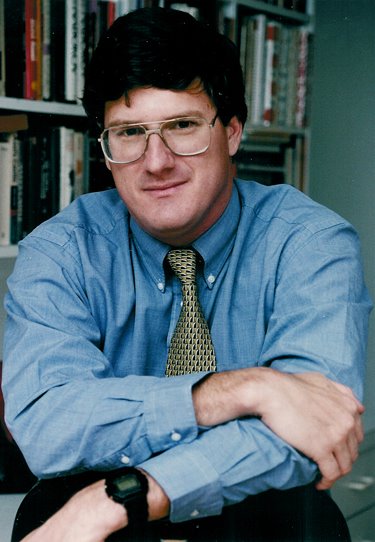
    CIA: Homepage For Kids


    In commerce to hook future consumers, you start educating children to your product. Only in America, the clandestine arm of government has a page for children from Kindergarden to 5th grade.

    Your kids are invited to visit the CIA headquarters in Langley, Virginia with Ginger, which is short for Virginia. Children can play the code breaking game called Cold Warriors. Decipher words as Berlin Wall, courage and George Bush.

    Learn about the CIA canine corps, with characters Dallas, Tiwoz, Gerro, Whisper, Maggie, Zoltan, Nikky or Orry, and the twins Harry (named after Truman)and Aerial, and their minature cameras.

    Conspicuous by their absence was; The Valerie Plame Blame Game, The Overthrow A Government for United Fruit Game, or Assasin's Target Game.

    See: DIRELAND, Open Democracy and CIA's Homepage for Kids. RENEGADE EYE

    Thursday, January 19, 2006

    Christopher Hitchens Joins ACLU Suit vs. NSA Spying

    Statement - Christopher Hitchens, NSA Lawsuit Client

    Although I am named in this suit on my own behalf, I am motivated to join it by concerns well beyond my own. I have been frankly appalled by the discrepant and contradictory positions taken by the Administration in this matter. First, the entire existence of the NSA's monitoring was a secret, and its very disclosure denounced as a threat to national security.
    Then it was argued that Congress had already implicitly granted the power to conduct warrantless surveillance on the territory of the United States, which seemed to make the reason for the original secrecy more rather than less mysterious. (I think we may take it for granted that our deadly enemies understand that their communications may be intercepted.)

    This makes it critically important that we establish an understood line, and test the cases in which it may or may not be crossed.

    Let me give a very direct instance of what I mean. We have recently learned that the NSA used law enforcement agencies to track members of a pacifist organisation in Baltimore. This is, first of all, an appalling abuse of state power and an unjustified invasion of privacy, uncovered by any definition of "national security" however expansive. It is, no less importantly, a stupid diversion of scarce resources from the real target. It is a certainty that if all the facts were known we would become aware of many more such cases of misconduct and waste.

    We are, in essence, being asked to trust the state to know best. What reason do we have for such confidence? The agencies entrusted with our protection have repeatedly been shown, before and after the fall of 2001, to be conspicuous for their incompetence and venality. No serious reform of these institutions has been undertaken or even proposed: Mr George Tenet (whose underlings have generated leaks designed to sabotage the Administration's own policy of regime-change in Iraq, and whose immense and unconstitutionally secret budget could not finance the infiltration of a group which John Walker Lindh could join with ease) was awarded a Presidential Medal of Freedom.

    I believe the President when he says that this will be a very long war, and insofar as a mere civilian may say so, I consider myself enlisted in it. But this consideration in itself makes it imperative that we not take panic or emergency measures in the short term, and then permit them to become institutionalised. I need hardly add that wire-tapping is only one of the many areas in which this holds true.

    The better the ostensible justification for an infringement upon domestic liberty, the more suspicious one ought to be of it. We are hardly likely to be told that the government would feel less encumbered if it could dispense with the Bill of Rights. But a power or a right, once relinquished to one administration for one reason, will unfailingly be exploited by successor administrations, for quite other reasons. It is therefore of the first importance that we demarcate, clearly and immediately, the areas in which our government may or may not treat us as potential enemies.


    This was published as a blog on The Huffington Post and in the ACLU Online Newspaper.

    Tuesday, January 17, 2006

    Did Bush Want To Bomb Al Jazeera??


    Was George Bush planning to commit an illegal act, against non-combatants?

    Al Jazeera Satellite Network, has hired a London based legal team, to discover if George Bush advocated bombing the Qatar based headquarters of Al Jazeera. The legal action will ask the British government to release a memo using a version of the freedom of information act, a five page document, labeled top secret, where the conversation between Bush and Tony Blair is documented, where Bush tried to get the bombing on the table. Qatar is also home to the US Central Command, and several US citizens live there.

    Al Jazeera has also asked the US government, to release whatever is available in US.

    From what is known about the memo, George Bush seriously wanted to take military action against Al Jazeera, only that Tony Blair and Colin Powell, talked him out of it.

    On another front, in a court in London, two men will appear to face charges under Britain's Official Secrets Act. The first man, David Keogh, a former employee of the Cabinet Office, is accused of unlawfully handing a confidential memorandum to the second man, Leo O'Connor, a researcher for a former Labor member of Parliament, Tony Clarke. They are accused of making damaging revelations related to international relationships.

    See: Christopher Hitchens Slate Article and Sky News On Al Jazeera Legal Action RENEGADE EYE
    Thursday, January 12, 2006

    THE WHAT WERE YOU THINKING GAME??

    The game is played like this: You are allowed to ask one question, to anyone living or dead. The question is started with, "What were you thinking when------?"

    I'll start the game. A question to Ronald Reagan. What were you thinking when you knew and never spoke or provided leadership before 36,058 Americans had been diagnosed with AIDS and 20,849 had died. The disease had spread to 113 countries, with more than 50,000 cases, and you didn't make any statement, until the last year of your term? The first modern case was diagnosed in 1981.

    What is your What were you Thinking question??????

    Thank you BBC World Sevice International.
    Renegade Eye

    Tuesday, January 10, 2006

    Hugo Chavez: Anti-Semite???

    According to a "Global Jewish News" press release;


    Chavez makes anti-Semitic slur

    Venezuela’s president said in his Christmas speech that “the descendants of those who crucified Christ” own the riches of the world.
    “The world offers riches to all. However, minorities such as the descendants of those who crucified Christ” have become “the owners of the riches of the world,” Chavez said Dec. 24 on a visit to a rehabilitation center in the Venezuelan countryside.


    According to a 01/05/06 AP Wire: Simon Wiesenthal Center has condemned the "anti-Semite" remarks by Venezuelan President Hugo Chávez and asked for "retraction and public apologies" according to a press release of the Jewish entity with a Latin American chapter located in Buenos Aires.

    According to the press release, on last December 24th, Chávez stated: "The world is for everybody, but it turned out that some minorities, the descendants of the same who crucified Christ, took possession of the world wealth."

    "Two central arguments of anti-Semitism converge in these remarks -charging the Jewish with killing Jesus and linking them with wealth," the Center stated in a letter sent to Chávez.

    "Both components have been used as the perfect excuse to justify the cruelest chasing and bloodshed throughout two millenniums," the letter signed by Shimon Samuels, directors of International Affairs of Wiesenthal Center, and Sergio Widder, representative for Latin America, underscored, as quoted by AFP.

    Samuels and Widder added that they would call the governments of Argentina, Brazil, Paraguay and Uruguay, the parties to the Southern Market (Mercosur) "to stay the process of Venezuela's incorporation in the regional block provided that Chávez shall not apologize in public."


    Let's look at what he said. This is the original Spanish version.

    "El mundo tiene para todos, pues, pero
    resulta que unas minorías, los descendientes de los mismos que crucificaron a Cristo, los descendientes de los mismos que echaron a Bolívar de aquí y también lo
    crucificaron a su manera en Santa Marta, allá en Colombia. Una minoría se adueñó de las riquezas del mundo, una minoría se adueñó del oro del planeta, de la plata, de los minerales, de las aguas, de las tierras buenas, del petróleo, de las riquezas,pues, y han concentrado las riquezas en pocas manos: menos del diez por ciento de
    la población del mundo es dueña de más de la mitad de la riqueza de todo el mundo y a la...más de la mitad de los pobladores del planeta son pobres y cada día hay más pobres en el mundo entero."


    Go to Google or AltaVista robot translation, you will see he is not talking about Jews or Romans, or Jewish people killing Christ. He is talking socialist allegorical rhetoric in a universal way.

    Another day in discrediting the anti-Chavezistas.

    Thank you Unrepentant Marxist and LE REVUE GAUCHE.


    RENEGADE EYE

    Saturday, January 07, 2006

    LOU RAWLS 1935-2006


    “sweet as sugar, soft as velvet, strong as steel, smooth as butter.”

    Thursday, January 05, 2006

    Spain To Offer Asylum To Sexual Refugees

    According to the Spanish newspaper El Pais, Spain will be offering amnesty to victims of sexual or gender oppression.

    The draft of the new law was leaked to El Pais. Spanish Premier Jose Luis Zapatero's Socialist government, will have the most progressive asylum law in the world. It is good news for victims of the Iranian mullah's antigay public hangings, women who face death for self expression etc.

    The policy is based on the 1951 Geneva Convention's antisexual repression statutes.

    In another event Premier Jose Luis Zapatero recently gave a speech in support of gay unions, before Spain's gay marriage law passed. It was the strongest gay rights speech ever given by a world leader.

    More info read: Spanish Asylum

    Friday, December 30, 2005

    Mariah Carey: Diva???


    This picture is from the UK Guardian December 17th 2005. The columnist said, "Even Nero held up his own cup."

    To read the full story, go to the blog of Molara Wood. Molara is a London based, writer, freelance journalist, and a poet. I recommend linking to her blog, and returning, to read her cultural observations.

    Thursday, December 29, 2005

    Bolivarian Dreams: Venezuela the Numbers.


    Let us see what the numbers say about Hugo Chavez's Bolivarian revolution in Venezuela.

    Economy
    The Venezuelan economy shrank in 2002 by 8.9%, because of the strike, and 2003 by 7.7%, but in 2004, the economy grew by 17.3% in gross domestic product, 17.8% in the non-oil sector, 18.6% in the private sector, and 11% public sector growth.

    Poverty
    42% in 1999
    47% in 2004
    38.5% in the first half of 2005
    Extreme poverty went from 18% in 2004, to 10% in the first part of 2005.

    Education and Health Care
    1998 3% of GDP invested in education.
    2005 7% of GDP invested in education.
    1998 57% of children enrolled in schools.
    2005 70% of children enrolled in schools, now offer free lunches,all day classes,
    and uniforms.
    20,000 Cuban doctors and dentists, staff free clinics.
    25% discount for groceries, at state run stores.
    See: Resource Center of the Americas in Minneapolis, MN

    Sunday, December 25, 2005

    Osama's Niece.


    Wafah Dufour the former Wahfah Bin Laden, is a 26 year old aspiring model and musician. Her father was one of Osama's 50 half brothers. She is scheduled to be presented in a glamour layout in GQ Magazine.

    Wafah was born in US, and lived in Saudi Arabia, until she was ten years old. She lived most of her life in USA. Pressures from after 9/11, made her to drop her last name.

    Needless to say, she doesn't see her father or extended family. Osama has 400 relatives, who live in Saudi Arabia.

    For more info see: BBC News.

    This post is a contribution, to the war against clerical fascism.

    Thursday, December 22, 2005

    Texas To Execute Retarded Man Due To Legal Technicality.

    Marvin Lee Wilson an inmate with an IQ in the low 60s, faces execution, despite it being illegal to execute a mentally retarded inmate. In Texas it's against the law for a death row inmate to file an appeal in state and federal court at the same time. His lawyer filed an appeal to federal court, at the last day it was in state court, missing a dead line. Last week, the 5th U.S. Circuit Court of Appeals in New Orleans refused to hear Wilson's appeal because his attorney missed a filing deadline. Here is what the court said in its ruling by a three-judge panel:

    "However harsh the result may be — particularly in a death penalty case involving a petitioner who has made a prima facie showing of mental retardation — Congress acted deliberately in enacting a strict limitations period." This is a disturbing ruling that perverts the legal system by elevating deadlines over justice, process over fairness. The Supreme Court has ruled that executing mentally retarded people is unconstitutional. That should not be trumped by a procedural rule. Basically, Wilson's case became entangled in a catch-22 contained in the complicated legal process that governs the filing of death penalty appeals in state and federal court.

    The bottom line is he faces execution, due to his lawyers errors. To read the whole story see: Texas Execution.

    Public confidence in the Texas justice has been shaken with the recent revelations that the state apparently executed the wrong man in 1993. Clearly there was a rush to convict and execute San Antonio resident Ruben Cantu. Carrying out another wrongful execution further erodes trust in the system.

    Tuesday, December 20, 2005

    GOD REST YE, UNITARIANS

    God rest ye, Unitarians, let nothing you dismay;
    Remember there’s no evidence
    There was a Christmas Day;

    When Christ was born is just not known,
    No matter what they say,
    O, Tidings of reason and fact, reason and fact,
    Glad tidings of reason and fact.

    Our current Christmas customs come
    From Persia and from Greece,
    From solstice celebrations of the ancient Middle East.

    This whole darn Christmas spiel is just
    Another pagan feast,
    O, Tidings of reason and fact, reason and fact,
    Glad tidings of reason and fact.

    There was no star of Bethlehem,
    There was no angels’ song;
    There couldn’t have been wise men
    For the trip would take too long.

    The stories in the Bible are historically wrong,
    O, Tidings of reason and fact, reason and fact,
    Glad tidings of reason and fact.

    Tune: God Rest You, Merry Gentlemen
    Words: Hymns for the Cerebration of Strife
    Copyright 1990 by Christopher Raible


    Thank you Thoughts That Get Stuck In My Head and Beancounters

    Monday, December 19, 2005

    Bolivia elects Evo Morales, an Indigenous Coca Farmer.


    Evo Morales, 46, an Aymara Indian and former coca farmer who also promises to roll back American-prescribed economic changes, had garnered up to 51 percent of the vote, according to televised quick-count polls, which tally a sample of votes at polling places and are considered highly accurate. He said he is against cocaine, but for coca.

    At 9 p.m., his leading challenger, Jorge Quiroga, 45, an American-educated former president who was trailing by as much as 20 percentage points, admitted defeat in a nationally televised speech.

    Bolivia has had an upsurge on political action in the last five years, starting with the April 2,000 struggle in Cochabamba, over privatization of water.

    In May-June 2005, a country wide strike took place, centering in La Paz, shut down roads, held meetings and rallies, calling for the nationalization of gas. The rank and file of Evo Morales's party MAS (Movement Toward Socialism), joined in. It was a situation of dual power. On one hand was the mass movement of workers and peasants, and on the other side was the oligarchy, and sections of the army. The army was politically split. There was talk in the oligarchy of splitting up the country. It was a revolutionary situation. The masses were realizing there demands were not going to be met by parlimentary means.

    There was no leadership who knew how to take power. In the last minute, a deal was reached, calling for early elections.

    Evo Morales always believed in the electoral path. Morales has gone out of his way to reassure the ruling class and imperialism, even having meetings in Europe with Repsol and other multinationals with interests in Bolivia, meeting the ambassadors of EU countries and even having a secret meeting with the US embassy. His vice-presidential candidate, former guerrilla ideologist Garcia Linera, made it clear from the beginning that he thinks socialism is off the agenda in Bolivia and that he favours the development of some sort of “Andean capitalism”. Nevertheless, the imperialists and their Bolivian agents feel extremely uneasy about the likely victory of Evo Morales in Sunday’s elections. They are not so concerned about Morales himself, but they are terrified of the forces that stand behind Morales.

    I believe Morales should be supported, not as a savior, but as a leader, who may be pushed by the expectations of the mass movement.

    In a very significant move the US took some 30 surface-to-air HN-5A missiles from the Bolivian army. These are highly portable and easy to use missiles of the same kind used by the Iraqi resistance.

    Friday, December 16, 2005

    Christopher Hitchens to Debate Scott Ritter 12/20/05 in Tarrytown, NY.


    The hot ticket is for the Tarrytown Music Hall debate between Christopher Hitchens, the most articulate defender of the Iraqi invasion, against Scott Ritter, the renegade former WMD inspector. See: DEBATE.

    Wednesday, December 14, 2005

    BBC Announces Poll of Iraqi attitudes.


    BBC announced results of a poll , sponsored by BBC, ABC and international news agencies, carried out by Oxford Research International. It was released 12/10/05. In all,1,711 Iraqis were interviewed throughout the country in October and November 2005.

    The news has ammunition for both sides of the Iraqi occupation debate.

    The poll found regional variations. The North and South of the country, had more optimism, than the center of the country.

    71% Life quite better.
    29% Quite worse.

    Will life be better in the coming year.
    64% Yes.
    12% No.

    Overall situation in your country.
    55% Bad.
    44% Good.

    Priority for new government.
    57% Security.
    10% Infrastructure.
    10% Invader withdrawal.

    50% New strong leader important.
    28% Democracy important.

    Five years from now, what is important?
    45% Democracy important
    31% Strong leader.

    67% Trust in religious and military leaders.
    25% Politicians.

    Not mentioned in this poll, earlier polls showed support for Coalition withdrawal. They also support a strong central government, despite a loophole filled constitution.

    I'm presenting the complexity of the situation.

    See BBC News

    Monday, December 12, 2005

    Flight 924: Another Take On Miami Shooting Last week.

    Rigoberto Alpizar, a naturalized American citizen, from Costa Rica, did not even want to get on Flight 924, between Miami and Orlando. Witnesses saw him arguing with his wife, who literally dragged him on the plane. He was returning from a missionary trip in Quito, Ecuador. Rigoberto was a bipolar person, non-compliant with taking medication.

    He started yelling, "I have to get out of this place." He carried his backpack, down the aisle, trying to get to the runway. Despite his wife's pleas, that he sick, he was gunned down by an air marshall. The air marshall said he was yelling, he had a bomb. This account is disputed by several passengers. The air marshall's position is that the wife's warnings, could have been a diversion.

    I'm writing about this subject from another view. I have met supporters of a Minneapolis based organization, called The Barbara Schneider Foundation. To have your name attached to a foundation, usually you just give $$$. Barbara gave her life. She was an untreated mentally ill person, killed by police. The Barbara Schneider Foundation teaches first responders, how to react to a mentally ill person in crises, so violence is averted. If BSF gave the air marshalls proper training, the shooting could have been averted.

    This involved the second Latin person gunned down in the war against terror. The first was Jean Charles de Menezes, a Brazilian, killed by British police four months earlier, after the London subway bombing. Police officials are blocking an independant inquiry, since video footage, negates the police account.

    The quick response, shoot first, ask questions later, needs to be more closely examined, or more innocent people will die.

    Wednesday, December 07, 2005

    Play The Dinner Party Game


    You are allowed to invite to a dinner party; any four people, from any time in history, living or dead.

    I'll start with my list.

    Leon Trotsky

    Kiera Knightly

    Pablo Picasso

    Carl Sagan


    Who gets your invitation??????

    Monday, December 05, 2005

    Free The Peacemaker Hostages.

    Four antiwar activists from the Christian Peacemaker Teams, who came to Iraq, to oppose the war, but stayed after the occupation, in solidarity with the Iraqi people, were taken hostage in Baghdad, on November 26th. On November 30th, a released hostage video, accuses them of being spies. The hostages are two Canadians, one American, and one British. The group that took them are called the Swords of Righteousness Brigade, a previously unknown group.

    The four are people of faith, but not missionaries. They have deep respect for Islam.

    The group holding them is giving the USA to December 08th to withdraw, or hostages will be killed.

    HOSTAGE PROFILES

    Sooden
    The member of a Christian pacifist organization, Harmeet Singh Sooden studied literature at the University of Auckland in New Zealand before traveling to Iraq.

    The 32-year-old Canadian, an electrical engineer, previously studied at McGill University in Montreal.

    A friend in New Zealand expressed shock at the kidnapping but added that his humanitarian efforts seemed natural.

    "That would not surprise me that he went to help somebody," said Allison Reay, manager of his school residence in Auckland.


    Fox

    When Tom Fox would return from his efforts with the Chicago-based Christian Peacemaker Teams in Iraq, friends say he always made time for the children at a Quaker center.

    Whether it was teaching kids about opposing violence or leading hiking excursions through the Shenandoah Valley during youth summer camp, Fox, 54, was an influential and loved role model, said Anne Bacon, the Quaker meeting clerk.

    Bacon said Fox and other CPT members knew the danger of working in Iraq, "but their goals are still very clear — peace belongs to all."


    Kember

    When Norman Kember was 18, he chose to work in a hospital rather than serve in the the military. Now 74, Kember remained a pacifist, his family said.

    "He feels very strongly that the occupation in Iraq is a mistake," the family said in a statement released before Al-Jazeera broadcast a video Tuesday of Kember and three other Western hostages in Iraq.

    Kember, of northwest London, was a professor of medical physics at St. Bartholomew's Hospital until retiring 13 years ago.

    Asked if visiting Iraq could be dangerous, he replied: "It could be."


    Loney

    James Loney spent many years working with Toronto's homeless before joining Christian Peacemaker Teams, friends say.

    The 41-year-old Toronto community worker had been leading the group in Iraq before he was abducted.

    "He's a deeply compassionate person. He's got a real sense of how important it is to be in solidarity and support of everybody who is in need or is marginalized," said Sarah Shepherd, a friend for 10 years.

    Loney was arrested in 1991 outside the U.S. consulate in Toronto for protesting the Persian Gulf War.


    Osthoff

    Susanne Osthoff, a 43-year-old German archaeologist who is fluent in Arabic, helped distribute medical supplies in Iraq.

    Relatives in Germany said that in recent years Osthoff had broken almost all ties with her family — including her 11-year-old daughter. During that time, she had been in and out of Iraq.

    The German newspaper Neue Osnabruecker Zeitung reported that Osthoff received a kidnap threat last summer from extremists linked to al-Qaida in Iraq leader Abu Musab al-Zarqawi, and that U.S. soldiers brought her from Mosul to Baghdad for her own safety.


    There is a petition signed by people as Cindy Sheehan, Tariq Ali, Ralph Nader, Howard Zinn asking for their release. You can sign it at: PETITION

    A German archaeologist, Susanne Osthoff, 43, also disappeared recently. On a video made public Nov. 29, kidnappers threatened to kill her unless Germany stops dealing with the Iraqi government.

    Saturday, November 26, 2005

    Corporate Donations: Creationism Si, Darwinism No!


    The American Museum of Natural History in New York, has curated an exciting exhibit, honoring the life of Charles Darwin. It cost $3,000,000 to organize and setup. The money has come totally from private individuals and non profits. Corporations gave 0, due to fear of attack from fundamentalist Yahoos.

    At the same time in Cincinatti, Oh, the Creationist Museum, received $7,000,000 dollars in corporate donations.

    The fundamentalists are louder, than their actual numbers. The majority of people want religion inside the church, not in the science classroom, or at the scientific exhibition.

    See: James Randi

    Friday, November 25, 2005

    Time for Authentic Iraq Debate.


    Christopher Hitchens has a brilliant analysis of the Iraqi invasion debate. Both liberals and conservatives, are running away from the issue, not only facing USA, but the world.

    The debate is shrill. Democrats are harping about what led up to the war, rather than what are they going to do about the threat of Islamic. Should Iraq split, or have a federalists central government? Secular Kurdish and Iraqi face violence from Baathists and Bin Ladenists, as well violence within different Shiite sects. Can we stop it? Republicans resort to equating war hero Rep. Murtha put in the same sentence as Michael Moore. There never was a threat of a mushroom cloud from Iraq. Our soldiers are adult and intelligent, they are not demoralized by debating the war.

    The debate has never been honest. I strongly recommend you read Hitchens's 11/22/05 Slate article Nowhere To Go

    Wednesday, November 23, 2005

    Cambodia: The Euthanasia Tourist Paradise.

    The Cambodian government is debating, about what to do about websites, telling people who want to commit euthanasia, to go to Kampot, about 180 km, from the capital. See: Euthanasia Tourism
    RENEGADE EYE

    Tuesday, November 22, 2005

    Iran: Four Youths Hanged in Public for Crime of Being Gay.


    This is from Human Rights Watch November 21, 2005.
    Iran: Two More Executions for Homosexual Conduct
    21 Nov 2005 23:55:14 GMTSource: Human Rights Watch(New York, November 22, 2005) – Iran's execution of two men last week for homosexual conduct highlights a pattern of persecution of gay men that stands in stark violation of the rights to life and privacy, Human Rights Watch said today. On Sunday, November 13, the semi-official Tehran daily Kayhan reported that the Iranian government publicly hung two men, Mokhtar N. (24 years old) and Ali A. (25 years old), in the Shahid Bahonar Square of the northern town of Gorgan.
    The government reportedly executed the two men for the crime of "lavat." Iran's shari'a-based penal code defines lavat as penetrative and non-penetrative sexual acts between men. Iranian law punishes all penetrative sexual acts between adult men with the death penalty. Non-penetrative sexual acts between men are punished with lashes until the fourth offense, when they are punished with death. Sexual acts between women, which are defined differently, are punished with lashes until the fourth offense, when they are also punished with death.
    "The execution of two men for consensual sexual activity is an outrage," said Jessica Stern, researcher with the Lesbian, Gay, Bisexual and Transgender Rights Program at Human Rights Watch. "The Iranian government's persecution of gay men flouts international human rights standards."
    In addition to the two executions last week, there have been other cases of persecution and execution of gay men in Iran in recent years.
    • In September 2003, police arrested a group of men at a private gathering in one of their homes in Shiraz and held them in detention for several days. According to Amir, one of the men arrested, police tortured the men to obtain confessions. The judiciary charged five of the defendants with "participation in a corrupt gathering" and fined them.
    • In June 2004, undercover police agents in Shiraz arranged meetings with men through Internet chatrooms and then arrested them. Police held Amir, a 21-year-old, in detention for a week, during which time they repeatedly tortured him. The judicial authorities in Shiraz sentenced him to 175 lashes, 100 of which were administered immediately. Following his arrest, security officials subjected Amir to regular surveillance and periodic arrests. From July 2005 until he fled the country later in the year, police threatened Amir with imminent execution.
    • On March 15, 2005, the daily newspaper Etemaad reported that the Tehran Criminal Court sentenced two men to death following the discovery of a video showing them engaged in homosexual acts. According to the paper, one of the men confessed that he had shot the video as a precaution in case his partner withdrew the financial support he had been providing in return for sex. In response to the man's confession, his partner was summoned to the authorities and both men were sentenced to death. As the death penalty was pronounced against both men, it appears to have been based on their sexual activity. "These abuses have created an atmosphere of terror for lesbians, gays, bisexuals and transgender people throughout Iran," said Stern. "But arrest, torture and execution are not limited to gays and lesbians. Any group of people deemed 'immoral' becomes subject to state-sanctioned persecution and even murder."
    In Iran, executions and lashings are regular means of punishment for a broad range of crimes, not merely same-sex acts. Judges often accept coerced confessions, and security officials routinely deny defendants access to counsel. Late last year, the Iranian judiciary, which has been at the center of many reported human rights violations, formed the Special Protection Division, a new institution that empowers volunteers to police moral crimes in neighborhoods, mosques, offices and any place where people gather. The Special Protection Division is an intrusive mechanism of surveillance that promotes prosecution of citizens for behavior in their private domain.
    Human Rights Watch called upon the Iranian government to decriminalize homosexuality and reminded Iran of its obligations under Toonen v. Australia (1994), the Human Rights Committee's authoritative interpretation of the International Covenant on Civil and Political Rights, to which Iran is party. Toonen v. Australia extends recognition of the right to privacy and the right to freedom from discrimination on the grounds of sexual orientation throughout human rights law.
    Furthermore, Human Rights Watch urged Iran to reform its judiciary in accordance with principles for fair trials enshrined in both the Iranian constitution and international human rights law. Finally, Human Rights Watch called upon Iran to cease implementation of capital punishment in all circumstances because of its inherent cruelty, irreversibility, and potential for discriminatory applications.

    See also:National Council of Resistance on Iran

    Thursday, November 17, 2005

    Hillary Clinton Endorses the Wall Against Palestine.


    Hillary and Bill Clinton visited Israel this past weekend to commemorate the 10th anniversary of the assassination of Prime Minister Yitzhak Rabin.

    Hillary took time out of the events honoring Rabin, to confer with Ariel Sharon, about security issues. She also made her way, to the 2/3 finished, 400 mile wall, between the West Bank and Israel. The wall is hated by the Palestinians, for cutting them off from jobs, schools, and farmland. This barrier has been internationally denounced, including by the UN.

    The "lesser evil" Hillary Clinton proclaimed, "This is not against the Palestinian people," Clinton said as she gazed over the massive wall. "This is against the terrorists. The Palestinian people have to help to prevent terrorism. They have to change the attitudes about terrorism."

    The Clintons then were off to Jordan. I wonder why they didn't visit Palestine??

    Sunday, November 13, 2005

    Paradise Now


    "Paradise Now" is the latest movie, from Palestinian director Hany Abu-Assad. It was filmed in the West Bank town of Nablus, where the director grew up. The production crew was Palestinian, Israeli and Western. The film follows the story of the main characters, Said and Khaled, two junk yard auto mechanics, who agree to be suicide bombers, having explosives attached to their bodies. The plot focuses on the last 27 hours, before zero hour, when the bombing inside Israel, will occur.

    The movie is an objective view of the circumstances. It is a movie, so there is excitement, and subplots. Don't be turned off by the subject. It is a movie, not a college term paper.

    See: Blogger Umkahlil's Review RENEGADE EYE

    Wednesday, November 09, 2005

    Hitchens On Darfur.

    Read Christopher Hitchens powerful essay in Slate Magazine 11/07/05 about the Darfur crisis. The Sudan situation is the quiet crisis. Another case of the United States and other world powers, ignoring, or being on the wrong side in Africa. SEE: HITCHENS ON THE DARFUR TRADGEDY

    I also recommend this blog, as a resource on Sudan: SUDAN WATCH RENEGADE EYE

    Monday, November 07, 2005

    The Indonesian School Girl Beheadings. Search For Killers Expanding.

    I'm writing on this subject as therapy. I was reading a blog about the beheadings of three Christian schoolgirls in Indonesia. I follow news about clerical fascists. The blog had a link with a warning about graphic pictures. I have worked as a medical professional earlier in my life and been around death, I don't get scared in horror movies, I consider myself thick skinned. I opened the link without thinking. The pictures from the murder scene haunt me. That's why I'm writing this.

    In Central Indonesia between the year 2000 and 2001, over 1,000 people died, in fighting between Christians and Muslims. Skirmishes still occur even after a settlement was negotiated.

    A few weeks ago, three teenage Christian girls were beheaded by masked assailants in the Poso area of Indonesia after Ramadan. The Indonesian government is sending 200 police, and 600 soldiers, to find the murderers. Pope Benedict sent condolences to the three girls families. The main suspects are Islamist clerical fascists.

    Readers of this blog, are 99.999% against clerical fascism. This entry is not written to convince anybody of anything. I'm haunted by these images, and wanted to say something. WARNING: EXTREME GRAPHIC CONTENT. The Worst of Humanity

    Saturday, November 05, 2005

    "Katrina Cough" hacks New Orleans.

    Several people returning, exposed to the residual dust and muck of Katrina, in Louisiana and Mississippi, have been presenting respiratory symptoms.

    Health officials say the symptoms include sinus headaches, sore throat, cough etc. For healthy people the symptoms pose no serious threat, others are in danger.

    The Enviromental Protection Agency announced it is safe to be there. They are the same ones who said the air was safe to breath, following the New York City September 11th incident. There has been accusations that the EPA, used faulty testing methods in New York, so Wall Street would open early.

    See the story about Katrina Cough in the LA Times LA TIMES KATRINA STORY.


    RENEGADE EYE

    Thursday, November 03, 2005

    Robots To Replace Slaves As Camel Jockeys.


    Camel jockeying is a popular sport in Qatar, and other parts of the United Arab Emerites. The jockeys have been four year old boys, kidnapped, and sold into slavery. They are kept malnourished to keep their weight for the races. Hungry boys are better for speed than well fed. Races occur in about 112-degree, with a speed of 25 mph.

    Enter the The Ansar Burney Welfare Trust, which started a worldwide campaign, to stop the use of child slaves in camel races.

    Enter another character,Alexandre Colot, project and services manager for K-Team, a swiss company, that builds robots. The children are now replaced by robots, and everyone lives happily ever after.

    Not quite. See Wired. It didn't end happily for the children. They were sent to Sudan, and not heard from.
    RENEGADE EYE

    Bird Flu


    RENEGADE EYE