The present conflict between the Western governments and the Islamic Republic of Iran can have disastrous human, political and social consequences. The terrible experience of Iraq has shown to all the catastrophes that can result from economic sanctions and a military attack. Deterioration of living conditions, economic plight, death, destruction and displacement of people, and increased repression by the Islamic regime, would be some of the immediate consequences of economic sanctions or a military attack on Iran. This policy would unleash Islamic terrorism on a regional scale and escalate it internationally.
We must stand up with all our power to the US government’s and its allies’ bullying. We must put an end to the crimes of the opposite pole, i.e. Islamic terrorism. We must help the people of Islam-stricken countries to get rid of the menace of Islamic terrorist states and forces. American militarism and Islamic terrorism have brutalised the world. Neither of them has a solution to the present crisis and its resulting problems. Rather, they are themselves the cause of this crisis and its aggravation. Civilised humanity must rise up against both these poles and the suffering that they have imposed on the world. The human and genuine solution to the problem of nuclear weapons, to Islamic terrorism and its horrific crimes against the people of the world, and to the militaristic bullying of the US and Western governments lies in the hands of us people.
Amid all this, the struggle of the people of Iran for freedom holds a prominent and critical place. For years there has been a mass social movement in Iran against the Islamic regime and for liberty and equality. The triumph of this movement over the Islamic Republic of Iran would be a decisive blow to political Islam and Islamic terrorism throughout the world. It would also be a powerful response to the US government’s political-military interventionism aimed at regime change, in the name of “exporting democracy”, and imposition of reactionary puppet regimes on other societies. The victory of the Iranian people would be a giant step forward and a turning point in the struggle against militarist and Islamic terrorism and in defence of liberty, civilisation and universal rights for all throughout the world.
We, the undersigned, declare:
1- No to war, No to economic sanctions
Economic sanctions and a military strike on Iran will have catastrophic human, political and social consequences. What happened in Iraq should not be repeated in Iran. These threats must stop immediately.
2- No to US militarism, No to political Islam
In the conflict between the state terrorism of the West and Islamic terrorism, the civilised world is not represented. Both sides of this conflict are reactionary and inhuman. They must be driven back.
3- Nuclear disarmament of all states
Neither Iran, nor the USA, nor any other state should have nuclear weapons. The Iranian regime’s nuclear project must stop immediately. However, states which have the largest stockpiles of nuclear weapons themselves are not competent authorities to judge on the nuclear capability of other states. Halting the Islamic Republic of Iran's nuclear project is the task of the freedom-loving people of the world, in particular the people of Iran - just as the nuclear disarmament of all states and liberation from the global nuclear nightmare can only be achieved by the struggle of the people of the world.
4- Attacks on civil liberties in the West in the name of ‘war on terror’ must stop
The governments in the West are violating or restricting civil rights and liberties in the name of fighting the terrorist threat and safeguarding security. Increased surveillance and control of citizens, curtailing freedom of expression and movement and denying the rights of immigrants are some of the commonest forms that this attack on people’s rights is taking. This must be stopped. No excuse for an attack on civil rights and liberties is acceptable.
5- We actively support the struggle of the people of Iran against a military attack and against the Islamic Republic of Iran
For 27 years the people of Iran have been fighting against repression, violation of women’s rights, sexual apartheid, stoning, torture, execution of political prisoners and poverty and economic deprivation. The people of Iran want to and can determine their own political destiny. Support for the struggle of the Iranian people for freedom, the victory of this struggle against the Islamic Republic and the establishment of people’s own direct rule will be a crucial step in standing up to the US government’s bullying and a decisive blow to Islamic terrorism in the Middle East and the world.
6- The Islamic Republic must be expelled from the international community
The Islamic regime in Iran must be kicked out of the international community, just like the racist South African regime, for 27 years of crimes against humanity, for the brutal suppression of the rightful struggles of the people, for the execution of over one hundred thousand political prisoners, for establishing a sexual apartheid in Iran and for promoting Islamic terrorism in the Middle East and throughout the world. We call for the non-recognition of the Islamic Republic as the representative of the Iranian people, for the ending of diplomatic ties with it and the closure of its embassies everywhere. We call for the expulsion of the regime from international institutions.
We invite all humanitarian, secular, anti-war and freedom-loving organisations, forces, parties and individuals in the world to sign this Manifesto and join the Third Camp to confront both poles of terrorism.
Initial list of signatories:
Mina Ahadi, Coordinator, International Committee against Stoning, Germany (including organisation).
Homa Arjomand, International Campaign against the Sharia Court in Canada and Director of Children First Now, Canada (including organisation).
Ophelia Benson, editor of Butterflies and Wheels, deputy editor of The Philosophers' Magazine, and co-author of 'Why Truth Matters', USA.
Nazanin Boroumand, Coordinator, Never Forget Hatun Campaign, Germany (including organisation).
Denis Cobell, President of the National Secular Society, Chair of Right to Refuse to Kill, and former Asst. Editor of Hyde Park Socialist, UK.
Deeyah, singer and composer, USA.
Caroline Fourest, writer, editor in chief of Prochoix, and author of several books, France.
Mersedeh Ghaedi, political prisoner in Iran for 8 years, Norway.
Tommy Gorman, writer, Ireland.
Hakeem Hasan, Secretary of the Health Care Workers' Council in Nasiriyah, Iraq (including organisation).
Reinhard Hascha, Historian, Germany.
Farshad Husseini, Deputy Director, International Federation of Iranian Refugees, the Netherlands (including organisation).
Khayal Ibrahim, Head of Women's Liberation of Iraq, Germany (including organisation).
Parvin Kaboli, Spokesperson of the International Campaign for Defence of Women's Rights in Iran, Sweden (including organisation).
Hartmut Krauss, editor of 'Hintergrund', Germany.
Terry Liddle, Chair of Lewisham Humanist Group, UK.
Azar Majedi, Chair of the Organisation of Women's Liberation, UK (including organisation).
Manochehr Masouri, webmaster of the International Committee against Executions, Sweden (including organisation).
Sean MacAughey, journalist, Ireland.
Reza Moradi, activist of the Young Communists' Organisation (including organisation), UK.
Anthony McIntyre, writer, former Republican prisoner and H-Blocks blanket protester in Maze prison in the 70s and 80s, Ireland.
Kevin McQuillan, former chairperson of the Irish Republican Socialist Party, Ireland.
Maryam Namazie, Writer, Director of the Worker-communist Party of Iran's International Relations, and 2005 winner of the National Secular Society's Secularist of the Year award, UK.
Richard O'Rawe, author of Blanketmen, Ireland.
Liam O Ruairc, Communications Worker, Ireland.
Fariborz Pooya, Director Iranian Secular Society, UK (including organisation).
Mohammad Reza Pooya, editor of Secular, the Netherlands (including publication).
Terry Sanderson, veteran of secular and gay activism, author of nine books with a journalistic career spanning 30 years and vice president of The National Secular Society, UK.
Michael Schmidt-Salomon, Giordano Bruno Foundation, Germany.
Antoine Sfeir, director of Les cahiers de l’Orient, and author of several books such as Les réseaux d’Allah (2001) et Liberté, égalité, Islam: la République face au communautarisme (2005), France.
Jalil Shahbaz, representative of the Defence of Secularism and Civil Rights in Iraq, Germany (including organisation).
Issam Shukri, Secretary of the Central Committee of the Left Worker-communist Party of Iraq, Iraq (including organisation).
Bahram Soroush, Public Relations of the International Labour Solidarity Committee of the Worker-communist Party of Iran, UK (including organisation).
Hamid Taqvaee, Secretary of the Central Committee of the Worker-communist Party of Iran, (including organisation).
To add your signature to the Manifesto, email thirdcampmanifesto@ukonline.co.uk. Moreover, please feel free to publish it.
For more information, the press can contact any of the signatories or Maryam Namazie at thirdcampmanifesto@ukonline.co.uk, telephone: +44 (0) 7719166731.
Maryam Namazie
Tuesday, May 30, 2006


Sunday, May 28, 2006
Minutemen Install 10 Mile Fence Against Immigrants in AZ...For Full Immigrant Rights, Not Amnesty
The anti-immigrant "The Minutemen," are building a 10 mile fence in southeastern Arizona, to stop immigrants, from entering the US. It is a protest, from the right of George Bush, who has asked for 6,000 National Guard troops. They want even more troops, and a wall from California to Texas. The Minuteman Civil Defense Corps plans to install a combination of barbed wire, razor wire, and in some spots, steel rail barriers along the 10-mile stretch of private land.
Anti-immigrant hysteria, has been a residue at times of imperialist war. In the time of World WarI, strikers mostly Mexican,members of the IWW (industrial Workers of the World) were forced at gunpoint, to be shipped to the Arizona desert, in a boxcar, to die of thirst. Sacco and Venzetti were executed. In WWII, Japanese Americans were put in concentration camps.
The Army Corps of Engineers have awarded Kellogg Brown & Root subsidiary of Halliburton Corporation, a $383 million grant to build "immigration detention centers", to each hold 5,000 detainees. They are to hold,an unexpected influx of immigrants, people fleeing from a natural disaster (another New Orleans), or for new programs that require additional detention space. Its goal is to remove all "removable aliens". This is part of the Dept of Homeland security's "Project ENDGAME."
Both the Democratic Party and the Republican Party, committed to divisive low wage programs, for immigrants. The amnesty programs provide citizenship, after paying thousands of dollars in taxes and fines, and waiting eleven years. We should oppose amnesty, also because it's a concept that applies to criminals. Amnesty for what?
The massive demonstrations, for immigrant rights, caught the political establishment by surprise. Most immigrant rights group, are subordinate to the Democratic Party. National flags were discouraged, while American flags were encouraged. Both parties represent the corporations desire, to pay the lowest wages to immigrants. To win the fight, Democrats and Republicans, can't be counted on.
See: The Internationalist.
RENEGADE EYE
Saturday, May 27, 2006
I Was Tagged Again
I was tagged by sonia-belle(adults only). I'm unable to escape this time.
1)If you are tagged, you must answer the question or questions, assigned by the person who tagged you.
2) You must credit the person who tagged you.
3) You can then choose other bloggers to tag.
Name ten of life's simple pleasures.
1) Old school ethnic food, as opposed to nuevo cuisine.
2) The internet (blogging).
3) Argentine tango, flamenco, and other dance experiences.
4) Jane Austen, Isabel Allende, and many others, fiction and non-fiction.
5) Cinema including Bollywood, Hitchcock and indies.
6) Magazines, high and low end.
7) Sex (Vanilla and Flavored).
8) Jazz, tango, roots, classical, show tunes CDs.
9) Long walks.
10) Art gallery openings (free food).
*These are in no particular order. All include high and low end.
I'll pick this list of blogs to tag. Please check them out.
Louis Proyect: The Unrepentant Marxist
Shhh...
Histologian
thoughtstreaming
RENEGADE EYE
1)If you are tagged, you must answer the question or questions, assigned by the person who tagged you.
2) You must credit the person who tagged you.
3) You can then choose other bloggers to tag.
Name ten of life's simple pleasures.
1) Old school ethnic food, as opposed to nuevo cuisine.
2) The internet (blogging).
3) Argentine tango, flamenco, and other dance experiences.
4) Jane Austen, Isabel Allende, and many others, fiction and non-fiction.
5) Cinema including Bollywood, Hitchcock and indies.
6) Magazines, high and low end.
7) Sex (Vanilla and Flavored).
8) Jazz, tango, roots, classical, show tunes CDs.
9) Long walks.
10) Art gallery openings (free food).
*These are in no particular order. All include high and low end.
I'll pick this list of blogs to tag. Please check them out.
RENEGADE EYE
Monday, May 22, 2006
Katherine Dunham 1909-2006
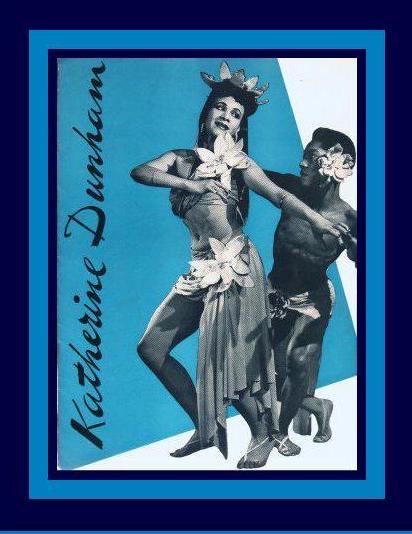
Today the world mourns the death of the renown choreographer, dancer, anthropologist, teacher, priestess, and activist Katherine Dunham.
She received her B.A. from the University of Chicago in 1936, in social anrhropology. Awarded a Rosenwald Travel Fellowship in 1936 for her combined expertise in dance and anthropology, she departed after graduation for the West Indies (Jamaica, Trinidad, Cuba, Haiti, Martinique) to do field research in anthropology and dance. Combining her two interests, she linked the function and form of Caribbean dance and ritual to their African progenitors. While a student at the University of Chicago, she persued her interest in dance, she had since her teen years.
The West Indies experience changed her life forever. She lived half time in Haiti, studying dance and anthropology. She was a princess in the Vodoun religion. She lectured widely, and wrote three books about her experience, DANCES OF HAITI (her master's thesis, published in 1947), and ISLAND POSSESSED (1969), underscoring how African religions and rituals adapted to the New World.
Her contribution to dance, is what is called "Katherine Dunham Technique," was the introduction to the dance world, the addition to modern dance the African and Caribbean styles. Her students included Marlon Brando, James Dean, and Eartha Kitt.
The Dunham experience was traditional folkloric movement, combined with Hollywood dazzle. When you see a movie from the late 1940s to the 1950s, with scenes of the natives dancing in a ritual, think Dunham.
The Katherine Dunham Dance Company toured the world from the 1940s to the 1960s.
As an activist she participated in a fast of 47 days, to protest US treatment of Haitian refugees. She also refused to perform in front of segregated audiences. She taught dance in East St Louis, to divert kids from gang activities.
During the 1980s, Dunham received numerous awards acknowledging her contributions. These include the Albert Schweitzer Music Award for a life devoted to performing arts and service to humanity (1979); a Kennedy Center Honor's Award (1983); the Samuel H. Scripps American Dance Festival Award (1987); induction into the Hall of Fame of the National Museum of Dance in Saratoga Springs, N.Y. (1987). That same year Dunham directed the reconstruction of several of her works by the Alvin Ailey American Dance Theater and "The Magic of Katherine Dunham" opened Ailey's 1987-1988 season.
In her later years, she was destitute. She died in a New York City, living in a long term care center. She gave up the limelight, to help the poor in the US, and Haiti.
She was the best known, and most important pioneer, in introducing African and Caribbean influence to classical, stage and cinema dancer. It is difficult to write about her accomplishments, without writing a book. Renegade Eye
Sunday, May 21, 2006
A Perspective of Flamenco Music and Dance

This is a sonia-belle(adults only) moment.
Between 800-900 AD, a large migration of of Untouchables from the Punjabi region of India, consisting of animal traders and trainers, acrobats, dancers, musicians, palmist and metalworking journeyed. They were called Roman/Gypsy. It is known that atleast part of them, roamed through Asia, to Europe, and landed in Spain. A second group came to Southern Spain, from North Africa. The second group had dark skin, and more the customs of the indigenous people along their route. To this day, both groups of nomads, do not mingle or intermarry.
During the Inquisition in Spain, Gypsies of both groups, were forced into ghettos. The isolation and repression, preserved the purity of the music. In the 18th century, they were granted more freedom, and the art form developed more.
If you have observed East Indian dance; you'll notice the footwork consists of stomping with feet, in a manner often found in flamenco. The other influences include Arab music, Jewish synagogue music, West African slave music, Latin American, Spanish folkloric, and Islamic elements.
Flamenco dance is in 2/4 rhythms. It doesn't have the pelvic movements of Middle Eastern dance. The open knees are an African influence. Flamenco started as a singing and clapping form.
Argentine tango has a connection to flamenco. Certain strains of tango, is adopting flamenco guitar, to an orchestra, with modifications of rhythm. The early tango was called tango flamenco.
I read a theory, that in the Philippines, the Spanish forbid studying martial arts. The natives practiced flamenco dance, to practice kicks and arm movements.
Nuevo flamenco is the modern form, popular in Spain, that incorporates rock, jazz, techno etc.
Unfortunately enjoying and participating in the arts, is a class priviledge. Despite the indigenous origins of this form, it is confined to performances locales as expensive restaurants.
See Spanish Gypsy and Flamenco Dance History.RENEGADE EYE
Tuesday, May 16, 2006
Ayaan Hirsi Ali: Resigns from Dutch parliament. Coming To America?

Somali born Dutch parliamentarian, and women and refugee rights activist Ayaan Hirsi Ali, resigned her government post, after admitting to lying on her application, for Dutch citizenship. She has been under attack from Islamists, since renouncing her faith in 2002, and being the producer and writer of "Submission," a documentary she made with slain by Islamists filmmaker Theo Van Gogh, depicting the oppression of women under Islam.
A few years ago, Ayaan admitted to lying, to get entry into Holland. It wasn't mentioned until a television show recently, brought up the issue. That fostered the Immigration Dept to revoke her Dutch citizenship.
She is outspoken against Islamists, and has been guarded, since she referred to Islamic culture as backward. Ayaan moved to a fenced community, but was forced to leave, because the residents protested her living there. They thought it put them also in peril.
She was a signer of the Manifesto Facing The New Totalitarianism along with this blog's team member Maryam Namazie.
It is rumored she will be moving to the USA, to work for the neoconservative American Enterprise Institute. I think the European left, should have stood up in her defense. Ayaan should have had all the security and housing, taken care of by the Dutch government. If they didn't give it to her, it should have been done by the left.
She plans a sequel to "Submission."RENEGADE EYE
Saturday, May 13, 2006
Israel: Russian Youth Attack Synagogue in Petah Tikva
Thank you to RandomPottins, for alerting me to this story.
Report from Ha'aretz, 11 May 2006:
Neo-Nazi gangs assaulting ultra-Orthodox Jews in Petah Tikva
By Moti Katz
A week after the desecration of the Great Synagogue in Petah Tikva, nothing remains of the horror the worshipers encountered there last Thursday when they arrived for morning prayers. The walls, which had been sprayed with swastikas and blasphemy, have been newly painted, the floor polished and the curtain covering the holy ark replaced. However, the danger is far from over. For the past two years the ultra-Orthodox community there, which includes some 5,000 families and 300 synagogues, has been subjected to incessant attacks by street gangs from the former Soviet Union (FSU).
The gangs have been beating ultra-Orthodox men, hurling curses at them and desecrating synagogues. "These youths feel out of place in the Russian community they belong to, but they are not accepted in Israeli society either," says Bella Alexandrov, the director of the multi-disciplinary youth center in Petah Tikva. She distinguishes between two kinds of immigrants - punks and skinheads.
"The skinheads buy Russian videos about 'white power' that call for cleansing Russia of Jews. They don't get it from home. It comes from not belonging and not finding answers to their distress."
On Sukkot eve last year, a number of teens bearing knives burst into the big Lithuanian yeshiva Or Israel on Rothschild Street in the city center. They started beating pupils, and throwing prayer books and scriptures on the floor. Yeshiva head Rabbi Yigal Rozen has no doubt that these incidents are anti-Semitic.
"There has always been violence in Israel, but never directed at synagogues. This started only in recent years. A month after the Sukkot incident, two yeshiva students were attacked and beaten up by Russian teens. The police arrested three of the attackers," he says. Most of the victims were dressed like ultra-Orthodox Jews, Rozen says, and therefore concludes that the assailants could not be Jewish.
"It's time the police realized these are anti-Semitic attacks. These gangs are not after money. The charity boxes were not robbed, nor were the Torah books, which are worth a fortune," he says.
Skinheads in the parks
Many of the incidents occur in the parks in the city center because numerous low-income immigrant families from Russia live there, says Rahamim Arbel, Jewish cultural coordinator for Petah Tikva's community centers. "On Friday nights Russian teens gather in parks with lots of alcohol and bongs. It's very unpleasant for the residents of the neighborhood," he says.
Arbel himself was attacked two years ago. He was with his small son and two friends, and they were returning from a lesson. On Rothschild street they were accosted by a group of drunk teenage boys and girls, aged 15 to 16. "They started swearing at us. I whispered to the others to walk away. The girls ran after us spitting and kicking. We fled. I got over it but my son will never forget that day," he recalls. An elderly man was attacked on Friday night a year ago but did not go to the police.
"I live in the center, near a park where the Russian gangs gather on Friday nights. Returning from a family visit I approached the park," he says. "A few boys demanded money and threatened me with a broken bottle. I told them I had no money because it was the Sabbath and went on walking. They knocked my hat off, kicked my shin and started kicking my hat. I tried to run and they followed me, cursing and throwing empty beer bottles. They were definitely harassing me because of my religious dress, because others passed by undisturbed," he says. "My parents survived the Holocaust. I come from exile and know what persecution is; and that's what I felt. Their appearance and the chains around their necks reminded me of neo-Nazis," he says.
A security camera on the menorah
Acting Mayor Paltiel Eisental tries to be reassuring. The relations between the city's secular and religious residents are very good, he says. This is a small gang, not a widespread trend, he says. "You must distinguish between vandalism due to theft and what happened in the Great Synagogue last week, which was brutality and hatred. I don't believe Jews could have done that. Those were acts aimed against a nation, against an idea. It's Nazism," he says.
The city council held an emergency meeting last week after the synagogue's desecration, and decided to safeguard the synagogue and find the vandals and indict them. Eisental says the city has a vandalism patrol in problem areas, but is having trouble reinforcing it due to a personnel shortage. "Every Hanukkah we put a nice big menorah at the yeshiva's entrance, right on the street," says Rabbi Rozen. "This year we were forced to put a security camera on it so that it wouldn't be vandalized," he adds sadly.
See: Haaretz Daily
RENEGADE EYE
Report from Ha'aretz, 11 May 2006:
Neo-Nazi gangs assaulting ultra-Orthodox Jews in Petah Tikva
By Moti Katz
A week after the desecration of the Great Synagogue in Petah Tikva, nothing remains of the horror the worshipers encountered there last Thursday when they arrived for morning prayers. The walls, which had been sprayed with swastikas and blasphemy, have been newly painted, the floor polished and the curtain covering the holy ark replaced. However, the danger is far from over. For the past two years the ultra-Orthodox community there, which includes some 5,000 families and 300 synagogues, has been subjected to incessant attacks by street gangs from the former Soviet Union (FSU).
The gangs have been beating ultra-Orthodox men, hurling curses at them and desecrating synagogues. "These youths feel out of place in the Russian community they belong to, but they are not accepted in Israeli society either," says Bella Alexandrov, the director of the multi-disciplinary youth center in Petah Tikva. She distinguishes between two kinds of immigrants - punks and skinheads.
"The skinheads buy Russian videos about 'white power' that call for cleansing Russia of Jews. They don't get it from home. It comes from not belonging and not finding answers to their distress."
On Sukkot eve last year, a number of teens bearing knives burst into the big Lithuanian yeshiva Or Israel on Rothschild Street in the city center. They started beating pupils, and throwing prayer books and scriptures on the floor. Yeshiva head Rabbi Yigal Rozen has no doubt that these incidents are anti-Semitic.
"There has always been violence in Israel, but never directed at synagogues. This started only in recent years. A month after the Sukkot incident, two yeshiva students were attacked and beaten up by Russian teens. The police arrested three of the attackers," he says. Most of the victims were dressed like ultra-Orthodox Jews, Rozen says, and therefore concludes that the assailants could not be Jewish.
"It's time the police realized these are anti-Semitic attacks. These gangs are not after money. The charity boxes were not robbed, nor were the Torah books, which are worth a fortune," he says.
Skinheads in the parks
Many of the incidents occur in the parks in the city center because numerous low-income immigrant families from Russia live there, says Rahamim Arbel, Jewish cultural coordinator for Petah Tikva's community centers. "On Friday nights Russian teens gather in parks with lots of alcohol and bongs. It's very unpleasant for the residents of the neighborhood," he says.
Arbel himself was attacked two years ago. He was with his small son and two friends, and they were returning from a lesson. On Rothschild street they were accosted by a group of drunk teenage boys and girls, aged 15 to 16. "They started swearing at us. I whispered to the others to walk away. The girls ran after us spitting and kicking. We fled. I got over it but my son will never forget that day," he recalls. An elderly man was attacked on Friday night a year ago but did not go to the police.
"I live in the center, near a park where the Russian gangs gather on Friday nights. Returning from a family visit I approached the park," he says. "A few boys demanded money and threatened me with a broken bottle. I told them I had no money because it was the Sabbath and went on walking. They knocked my hat off, kicked my shin and started kicking my hat. I tried to run and they followed me, cursing and throwing empty beer bottles. They were definitely harassing me because of my religious dress, because others passed by undisturbed," he says. "My parents survived the Holocaust. I come from exile and know what persecution is; and that's what I felt. Their appearance and the chains around their necks reminded me of neo-Nazis," he says.
A security camera on the menorah
Acting Mayor Paltiel Eisental tries to be reassuring. The relations between the city's secular and religious residents are very good, he says. This is a small gang, not a widespread trend, he says. "You must distinguish between vandalism due to theft and what happened in the Great Synagogue last week, which was brutality and hatred. I don't believe Jews could have done that. Those were acts aimed against a nation, against an idea. It's Nazism," he says.
The city council held an emergency meeting last week after the synagogue's desecration, and decided to safeguard the synagogue and find the vandals and indict them. Eisental says the city has a vandalism patrol in problem areas, but is having trouble reinforcing it due to a personnel shortage. "Every Hanukkah we put a nice big menorah at the yeshiva's entrance, right on the street," says Rabbi Rozen. "This year we were forced to put a security camera on it so that it wouldn't be vandalized," he adds sadly.
See: Haaretz Daily
RENEGADE EYE
Monday, May 08, 2006
Hugo Chavez Seeking 25 Year Term? Not quite

This is reprinted from the blog Latin America News Review. It is a great resource on Latin American issues.
By Justin Delacour
Latin America News Review
May 8, 2006
A little scrutiny of a recent Associated Press report about Venezuela provides a lesson in how the English-language press often gets the story wrong. Take the first sentence: "President Hugo Chavez said Saturday that Venezuelan voters should have the chance to decide whether he should govern the country for the next 25 years."
No, such a referendum would not be about "whether he should govern the country for the next 25 years." A referendum would be about whether Chavez would be permitted to run every six years and --in the event that he were to continue winning elections-- serve multiple presidential terms. The AP report's opening sentence makes it sound as if such a referendum would do away with elections in Venezuela, as if its intent would be to grant Chavez a new 25-year term in office! The website of The Calgary Sun even titles the wire report "Chavez seeking 25-year term"!!
This is obviously an extremely poor piece of reporting. Chavez made it clear that, if the opposition committed to participating in the upcoming presidential election, he would not convoke a referendum to end presidential term limits. He explained that the intent of his threat to convoke such a referendum was not to perpetuate himself in power but rather to defend the Bolivarian Revolution.
Fortunately, Agence France Press (AFP) got the story right. The opening sentence of AFP's Spanish-language report reads, "Venezuelan president Hugo Chavez claimed Saturday that, if the opposition decides not to run candidates in the December presidential election, he could decree a referendum to permit his reelection for multiple terms until 2031."
So the choice for the opposition is simple. If they don't want a referendum that would end presidential term limits, they shouldn't pull out of the upcoming presidential election. As far as I'm concerned, the threat of a referendum is a perfectly reasonable (and democratic) way to dissuade the opposition from trying to delegitimize Venezuela's electoral process.
When Venezuela's opposition knows it's going to lose an election, it has a tendency to try to delegitimize the electoral process. Instead of facing up to the fact that it is unpopular, the business-led opposition tries to shift the blame for its electoral misfortunes to the National Electoral Council (CNE). The opposition claims that the CNE could commit "fraud" and that the vote might not be secret. Opposition conspiracy theories of this nature are legion. Never mind that there have been international observers on hand that have testified to the fairness of Venezuela's elections. Never mind that even the opposition's own polls show that Chavez is much more popular than they are.
In other words, many members of the opposition aren't really interested in trying to win elections because they know that they lack popular support. Many in the opposition prefer, instead, to try to create the impression internationally that Venezuela's electoral process is illegitimate.
One has to understand that, given the combination of the opposition's economic interests and political incompetence, it is very desperate. Since it is unable to attract popular support domestically, the opposition resorts to attempts to draw more U.S. hostility toward Chavez in hopes that such hostility might somehow weaken or destroy his presidency. Electoral boycotts are part and parcel of this strategy. The opposition wants to create the (false) impression internationally that Venezuela is another Ukraine and that Chavez wins elections by "fraud," etc. etc. That's what Chavez is up against.
OAS General Secretary Jose Miguel Insulza effectively summed up the problem that Chavez faces when he said the following about the opposition's boycott of legislative elections last December:
"We had a problem with the Venezuelan opposition, which assured us that they would not withdraw from the [electoral] process if certain conditions were met. These were met and, despite this, they withdrew."
Insulza continued, "if the path of abstention is chosen, then one cannot complain that the entire parliament is in the hands of one's political adversary."
RENEGADE EYE
Saturday, May 06, 2006
Blogger Notes and New Team Member Announced
I established this blog a little over a year ago. I thought I should post something about blogging in general. I enjoyed the level of dialog that occured on this blog, and made friends all over the world.
This blog has visitors that I have little agreement with, even on the left. A Maoist can argue directly with a Trotskyist, in a more civil fashion than on the street here. Some of the dialogs have been intense; just read any Hugo Chavez post I made. I have actually reversed positions because of what I learned from the dialogs.
I write a post, than surf for new people to respond. To get traffic, you have to sign others blogs. Another action is to be liberal about trading links. I don't agree with, or even understand the politics, of all my links.
I think shorter posts are better than longer. How can you receive comments if everything is said? Like the great artists who left part of a painting unfinished, so the viewers imagination can work. To comment you don't need to write a book, a short comment trumps no comment.
I have invited to post at this blog Maryam Namazie. I have been courting her for a few months, to contribute to this blog, to post anytime and on anything she wants. Maryam finally consent to be a team member. It is generous of her, since she is a new mother. She knows I have dusagreements with her party about communist history, and the nature of the Soviet Union. I have found in her, a strong voice against imperialism and Islamism at the same, and a fighter for secularism, human rights, and refugee relief work. With war drums sounding against Iran, her insights will add much to this blog. I'm stealing a short bio of hers from her website: Maryam Namazie is currently a producer for TV International English, a member of the Central Council of the Organisation for Women's Liberation and Director of the Worker-communist Party of Iran's International Relations Committee. She is also co-editor of WPI Briefing and the Worker-communist Review.
She has spoken at numerous conferences and written many articles on women's rights issues, violence against women, political Islam, and secularism - some of which have been translated into various languages. She has been interviewed on BBC TV and radio, including the Heaven and Earth programme and the Moral Maze, ABC TV Australia, quoted in Time magazine, the Independent, the Observer, the Guardian, Al Ahram Weekly, Persian media outlets, and had articles published in various sources, including Tribune, Gay Times, Medusa Journal, Gender Policy Review.
Previously, Namazie was the elected Executive Director of the International Federation of Iranian Refugee, a refugee run organisation with 60 branches in 15 countries worldwide; founded the Committee for Humanitarian Assistance to Iranian Refugees (CHAIR); was the Human Rights Advocates Training Programme Coordinator at Columbia University's Centre for the Study of Human Rights in New York and the NYC Refugee Coordinator/ US National Steering Committee Member of Amnesty International. She also ran a refugee women's leadership training programme in NYC.
She works and lives in the UK.
See: Maryam Namazie.
This blog has visitors that I have little agreement with, even on the left. A Maoist can argue directly with a Trotskyist, in a more civil fashion than on the street here. Some of the dialogs have been intense; just read any Hugo Chavez post I made. I have actually reversed positions because of what I learned from the dialogs.
I write a post, than surf for new people to respond. To get traffic, you have to sign others blogs. Another action is to be liberal about trading links. I don't agree with, or even understand the politics, of all my links.
I think shorter posts are better than longer. How can you receive comments if everything is said? Like the great artists who left part of a painting unfinished, so the viewers imagination can work. To comment you don't need to write a book, a short comment trumps no comment.
I have invited to post at this blog Maryam Namazie. I have been courting her for a few months, to contribute to this blog, to post anytime and on anything she wants. Maryam finally consent to be a team member. It is generous of her, since she is a new mother. She knows I have dusagreements with her party about communist history, and the nature of the Soviet Union. I have found in her, a strong voice against imperialism and Islamism at the same, and a fighter for secularism, human rights, and refugee relief work. With war drums sounding against Iran, her insights will add much to this blog. I'm stealing a short bio of hers from her website: Maryam Namazie is currently a producer for TV International English, a member of the Central Council of the Organisation for Women's Liberation and Director of the Worker-communist Party of Iran's International Relations Committee. She is also co-editor of WPI Briefing and the Worker-communist Review.
She has spoken at numerous conferences and written many articles on women's rights issues, violence against women, political Islam, and secularism - some of which have been translated into various languages. She has been interviewed on BBC TV and radio, including the Heaven and Earth programme and the Moral Maze, ABC TV Australia, quoted in Time magazine, the Independent, the Observer, the Guardian, Al Ahram Weekly, Persian media outlets, and had articles published in various sources, including Tribune, Gay Times, Medusa Journal, Gender Policy Review.
Previously, Namazie was the elected Executive Director of the International Federation of Iranian Refugee, a refugee run organisation with 60 branches in 15 countries worldwide; founded the Committee for Humanitarian Assistance to Iranian Refugees (CHAIR); was the Human Rights Advocates Training Programme Coordinator at Columbia University's Centre for the Study of Human Rights in New York and the NYC Refugee Coordinator/ US National Steering Committee Member of Amnesty International. She also ran a refugee women's leadership training programme in NYC.
She works and lives in the UK.
See: Maryam Namazie.
Sunday, April 30, 2006
Dean Reed (1938-1986) The Red Elvis
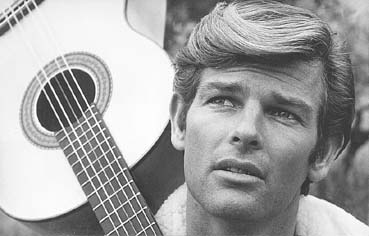
Dean Reed was born in America, but spent most of his life in East Germany. He was an actor, singer, and songwriter, who rocked East Europe during the days of the Soviet Union.
He was born in Denver, and moved to California as a young man signing with Capitol Records. He was groomed to be a teen idol. He appeared on television on the show Bachelor Father in 1958. His music was modestly successful.
He recorded a song called "Our Summer Romance," while on a tour of South America. That song soared up in South America. There he would become more well known than Elvis. He settled in Argentina.
In Argentina he became involved leftist politics. He opposed nuclear weapons, and performed free shows in barrios, and prisons. He was deported in 1966.
He performed in movies in Rome, and often toured East Europe, acting, directing and writing movies. He settled in East Germany.
Reed supported the politics of his new country. He never joined the ruling party, or proclaimed himself socialist. On the TV show "60 Minutes," he declared support for the Berlin Wall, and the Soviet incursion into Afghanistan. He received hate mail, and shocked family and friends.
He never renounced his US citizenship. He payed taxes to the US government.
In 1986 he was found dead in East Germany. His friend in Germany say suicide, his family says murder.
Tom Hanks is making a movie about his life called "Comrade Rockstar."
I was introduced to him when he was visiting in Minnesota, to support an antiwar group in the Vietnam period.
There might be more insight on Dean Reed from Redwine and the beatroot.
See: Wikipedia/Dean Reed.
RENEGADE EYE
Friday, April 28, 2006
Iraq: Moral Militia
Kudos to Penguins in bondage.... for alerting me to this article in Timesonline from the UK.
Iraqis facing persecution from religious zealots, are not allowed political asylum in the USA, since Iraq is now a "democratic" country.
Young lovers court danger from puritan moral militia
From Daniel McGrory in Baghdad
The Times April 27, 2006
DATING is a dangerous game in Baghdad. Ali Ilhiam knows that holding hands with his teenage girlfriend could cost him a beating — or worse — from militant extremists.
“Boys can’t be seen walking and laughing with their girlfriends any more in the new Baghdad,” the 21-year-old university student said, glancing over his shoulder to make sure that he was not being watched. Friends of his have been dragged from their cars, imprisoned and threatened with death by self-appointed moral guardians for daring to link arms with their girlfriends in public.
An artificial lake on the banks of the Tigris, built by Saddam Hussein to cool one of his palaces, is among the few sanctuaries where Mr Ilhiam can still meet Murwa Majid, 19. Both are studying at nearby Baghdad University and skip lectures to spend a few minutes together.
They, like many of their friends, dread the approach of the summer holidays, when they will be separated, so they are planning to fail their exams so they can spend two months at college studying for resits.
“This is the only life we get,” Mr Iliam said. Gone are the days when he could go to a nightclub or a party with his girlfriend. “Baghdadis don’t go out any more after dusk. We are all prisoners now.”
Most cinemas and discos have closed, and the few restaurants popular with the younger crowd close at 8pm. Gunmen hang around former favourite haunts and check identity cards to make sure that couples are married.
Mr Iliam, a physical education student, wonders how much longer the Jadariyah Tigris park will remain a haven.
Three weeks ago a gang of militiamen driving on the main road that runs past the park spotted one of his friends while he was embracing his fiancée near the lake.
The gunmen chased the couple as they drove away and forced their vehicle off the road. The driver, a 29-year-old engineer, who would give his name only as Ahmed, was dragged from behind the wheel and pistol-whipped. His terrified partner, Wasan, 23, who is studying at the College of Science, was locked in the car and made to watch. The gunmen took the couple to a makeshift detention centre and warned them that if they were seen “misbehaving” again they would be shot. They have never returned to the lake.
In recent days two young women had battery acid thrown at their legs by Mehdi army members, who are loyal to the militant young cleric Moqtada al-Sadr. The victims were told that they were being punished for dressing inappropriately.
In Basra late last year a couple were ambushed while walking in the zoo. The man was shot dead and his young partner was partially blinded by the gunmen, who stripped and photographed her, saying that they would send the pictures to her family. She ran home and killed herself.
Mr Ilhiam recalled that holding hands with a girl was permissible under the regime of Saddam Hussein, but he expressed concern about the growing puritanism that is being enforced by both Shia and Sunni militias.
“This country has expired,” Murwa Majid said, nervously twisting a gold necklace that spelt out her name. “No matter what our new Prime Minister says, my generation is pessimistic. Life will not improve any time soon. This is not living.”
Ali Athra, 24, who was also in the park with her boyfriend, ran her hands through her long, black hair and said that if her usual taxi driver did not show up in the morning to take her to university she would quickly change her clothes and order another car.
“I run upstairs, tear off the jeans and top and put on the abaya (headscarf) and a long coat to my ankles,” she said.
“Girls don’t walk the streets alone any more. We used to shop, go dancing, have parties, until a few months after the downfall of Saddam, and bit by bit, every day, we feel more repressed.”
RENEGADE EYE
Iraqis facing persecution from religious zealots, are not allowed political asylum in the USA, since Iraq is now a "democratic" country.
Young lovers court danger from puritan moral militia
From Daniel McGrory in Baghdad
The Times April 27, 2006
DATING is a dangerous game in Baghdad. Ali Ilhiam knows that holding hands with his teenage girlfriend could cost him a beating — or worse — from militant extremists.
“Boys can’t be seen walking and laughing with their girlfriends any more in the new Baghdad,” the 21-year-old university student said, glancing over his shoulder to make sure that he was not being watched. Friends of his have been dragged from their cars, imprisoned and threatened with death by self-appointed moral guardians for daring to link arms with their girlfriends in public.
An artificial lake on the banks of the Tigris, built by Saddam Hussein to cool one of his palaces, is among the few sanctuaries where Mr Ilhiam can still meet Murwa Majid, 19. Both are studying at nearby Baghdad University and skip lectures to spend a few minutes together.
They, like many of their friends, dread the approach of the summer holidays, when they will be separated, so they are planning to fail their exams so they can spend two months at college studying for resits.
“This is the only life we get,” Mr Iliam said. Gone are the days when he could go to a nightclub or a party with his girlfriend. “Baghdadis don’t go out any more after dusk. We are all prisoners now.”
Most cinemas and discos have closed, and the few restaurants popular with the younger crowd close at 8pm. Gunmen hang around former favourite haunts and check identity cards to make sure that couples are married.
Mr Iliam, a physical education student, wonders how much longer the Jadariyah Tigris park will remain a haven.
Three weeks ago a gang of militiamen driving on the main road that runs past the park spotted one of his friends while he was embracing his fiancée near the lake.
The gunmen chased the couple as they drove away and forced their vehicle off the road. The driver, a 29-year-old engineer, who would give his name only as Ahmed, was dragged from behind the wheel and pistol-whipped. His terrified partner, Wasan, 23, who is studying at the College of Science, was locked in the car and made to watch. The gunmen took the couple to a makeshift detention centre and warned them that if they were seen “misbehaving” again they would be shot. They have never returned to the lake.
In recent days two young women had battery acid thrown at their legs by Mehdi army members, who are loyal to the militant young cleric Moqtada al-Sadr. The victims were told that they were being punished for dressing inappropriately.
In Basra late last year a couple were ambushed while walking in the zoo. The man was shot dead and his young partner was partially blinded by the gunmen, who stripped and photographed her, saying that they would send the pictures to her family. She ran home and killed herself.
Mr Ilhiam recalled that holding hands with a girl was permissible under the regime of Saddam Hussein, but he expressed concern about the growing puritanism that is being enforced by both Shia and Sunni militias.
“This country has expired,” Murwa Majid said, nervously twisting a gold necklace that spelt out her name. “No matter what our new Prime Minister says, my generation is pessimistic. Life will not improve any time soon. This is not living.”
Ali Athra, 24, who was also in the park with her boyfriend, ran her hands through her long, black hair and said that if her usual taxi driver did not show up in the morning to take her to university she would quickly change her clothes and order another car.
“I run upstairs, tear off the jeans and top and put on the abaya (headscarf) and a long coat to my ankles,” she said.
“Girls don’t walk the streets alone any more. We used to shop, go dancing, have parties, until a few months after the downfall of Saddam, and bit by bit, every day, we feel more repressed.”
RENEGADE EYE
Sunday, April 23, 2006
Nepal: King's Days Are Numbered

The last three months in Nepal have presented the deepest political crisis in the last decade in Nepal. In last two weeks, a general strike has paralyzed the country, and signal the monarchy is on the verge of being destroyed. China provides luke warm support to the monarchy, otherwise it's isolated. It is on its last days.
The mass movement is led by a coalition of the Nepalese congress, a seven party coalition called the Seven Parties Alliance, and Maoist insurgents who control about 60% of the countryside. All segments of society including judges, lawyers, trade unions, peasants etc have come out against the monarchy. The general strike is open ended, will go on until the monarchy is gone. No going back to the status quo.
The Maoists have been involved in the last several years in skirmishes against the army, known to be barbaric. They recently called for a cease fire to expose the inflexibility of the monarchy. This tactic increased the Maoist's support. The Maoist's support the program of the Seven Party Alliance's call for non violent change, and new parliament to form a new government.
The question is how will the pro-bourgeois elements of the movement maneuver? The Maoists must go beyond calling for the king to step down. Their base is rural, while the movement against the king is urban. Maoists in the trade unions, generally neglect worker's issues, and organize them to support country side struggles. What is needed is an urban/rural alliance to overthrow the feudal system. The Maoists are content to build a parliamentary government, than in the late, late future establish socialism.
The general strike movement is far reaching, and moves faster than its leadership. The rulers of India, Pakistan and US, call on the king to step down. The Maoists will be integrated into a parliamentary system. They seem satisfied with that.
Nepal alone can't establish socialism. It would have allies with workers and peasants in India, Pakistan and Tibet.
RENEGADE EYE
Friday, April 14, 2006
Dinner Party Game2
My most far reaching post was my dinner game post. I was linked to by several bloggers, I never knew of before.
The Rules:
1) You can invite any four people, living or dead, from any period in history.
2) If you played before, use different guests,
I'll start.
V.I. Lenin
Diego Rivera
Astor Piazzolla (tango composer)
Salma Hayek
Last year I invited to the party: Leon Trotsky, Keira Knightly, Carl Sagan and Pablo Picasso.
RENEGADE EYE
The Rules:
1) You can invite any four people, living or dead, from any period in history.
2) If you played before, use different guests,
I'll start.
V.I. Lenin
Diego Rivera
Astor Piazzolla (tango composer)
Salma Hayek
Last year I invited to the party: Leon Trotsky, Keira Knightly, Carl Sagan and Pablo Picasso.
RENEGADE EYE
Thursday, April 13, 2006
Daniel Pipes On Iraqi Civil War
This is from the April 11, 2006 WorldSocialist Web Site, the most widely read Socialist site on the internet.
Daniel Pipes, the director of the neo-conservative Middle East Forum and a vociferous supporter of the invasion of Iraq, is not an inconsequential figure in the American political establishment. His writings consistently articulate and refine the views of the extreme right in the United States, a layer that exerts considerable influence over the policies of the Bush administration. It is therefore noteworthy when such an individual begins publicly arguing that a sectarian civil war in Iraq would be to the strategic advantage of US imperialism. One can conclude that similar views are prevalent in Washington’s corridors of power.
Pipes first presented what he views as the advantages of an Iraqi civil war in an article published by the New York Sun on February 28—six days after the destruction of the Shiite Muslim Al-Askariya mosque by suspected Sunni Muslim extremists and amid the reports that Shiite militias were carrying out revenge killings of Sunnis. He expanded on the theme during a visit to Australia in March, in interviews given to Australian Broadcasting Corporation (ABC) television and radio current affairs programs.
The core of Pipes’ argument is that a fratricidal conflict between Sunni and Shiite Iraqis, whatever the death toll and however tragic for the Iraqi people, would have definite benefits for American strategic, economic and military interests in the Middle East.
Pipes’ calculations are completely ruthless. The US and its allies invaded Iraq on false pretexts, including that of establishing “democracy”. Yet Pipes rejects completely that the United States has any obligations toward the population. “Iraq’s plight is neither a coalition responsibility nor a particular danger to the West,” he wrote in the New York Sun.
Instead, the catastrophe unfolding in Iraq could have positive consequences, according to Pipes. In the short term, he asserts that a civil war would “reduce coalition casualties” as Iraqis “fight each other”. Pipes also argues that there would be fewer terrorist attacks on US and allied targets outside Iraq as networks like Al Qaeda—which is based on Sunni extremism—would focus their attention on a sectarian war against Shiites. He wrote: “When Sunni terrorists target Shiites and vice-versa, non-Muslims are less likely to be hurt.”
More importantly for Pipes, however, civil war in Iraq would end what he views as the dangerous talk of establishing democracy in Iraq or anywhere else in the Middle East. As far as Pipes is concerned, the masses of the region should not and cannot have democratic rights because they will not necessarily vote for the preferred candidates of Washington. To the extent that elections in Iraq, Afghanistan, Palestine, Lebanon and elsewhere have given the population the chance to express their sentiments, large numbers of people have given their support to Islamic fundamentalist movements opposed to the American presence in the region—organisations that Pipes refers to as the “extreme enemies” of US interests.
Before the war, Pipes was indistinguishable from other neo-conservative ideologues who were justifying a US invasion of Iraq on the grounds it would inspire a democratic “revolution” in the Middle East. In an article published by the New York Post on February 11, 2003, Pipes argued that an American victory and the “successful rehabilitation” of the country “will bring liberals out of the woodwork and generally move the region toward democracy”.
Within a matter of months, as resistance to the US occupation developed, he had abandoned such talk. Pipes’ argued last month that Iraq is in “no position... to develop advanced institutions of democracy and capitalism”. By implication, the type of regime advocated by Pipes in Iraq is a pro-US dictatorship no less brutal than that of Saddam Hussein—after many hundreds of thousands more Iraqis have lost their lives in a sectarian bloodbath.
Elsewhere in the region, Pipes asserts that it will take “decades” before the people of the Middle East are ready to elect their own governments. A fervent defender of the Zionist state in Israel, Pipes is particularly outraged by the victory of Hamas in the Palestinian elections. While he rhetorically declares that democracy is a long-term goal, Pipes articulates the view of the US ruling class that no regime can be allowed that is not compliant with American interests.
From this standpoint, Pipes argues that a civil war in Iraq could be advantageous by providing a pretext for US military action against Iran and Syria. Open warfare between Iraqi Sunnis and Shiites, he wrote in the New York Sun, would most likely “invite Syrian and Iranian participation... hastening the possibility of an American confrontation with those states, with which tensions are already high”.
The American neo-conservatives make no secret of their ambitions for “regime-change” in Iran and Syria, which are currently regarded as obstacles to untrammeled US domination over the Middle East. An incredulous ABC radio journalist asked: “America can’t afford to take them on in open warfare, can it?” And Pipes bluntly replied: “America’s good at open warfare. It’s just not good at occupying countries.”
While Pipes repeats ad nauseum that a civil war in Iraq would be a tragedy, the obvious conclusion is that he believes the US has no interest in preventing one. The fact that such a figure can callously speak of the advantages of a sectarian bloodbath points to the possibility that agencies of the US government that share his views may have been involved in encouraging communal conflict. Numerous highly suspicious provocations, murders and bombings have occurred at particularly opportune times for the US occupation and the Bush administration.
More generally, American policy since the occupation of Iraq began has been to foment tensions between the country’s various religious and ethnic groups in order to weaken resistance to the US presence. A classic “divide and rule” strategy has been pursued.
Kurdish nationalist and Shiite fundamentalist organisations were promoted into positions of privilege and authority at the expense of the largely Sunni Arab elite that dominated under the Hussein regime. Almost as soon as the war was over, shadowy Sunni organisations began carrying out murderous and indiscriminate attacks on Shiite civilians. Thousands of Shiites have been killed. The Shiite fundamentalist parties have used the carnage to justify their collaboration with the US forces.
A considerable proportion of the US-recruited Iraqi military were members of Kurdish or Shiite militias. The Sunni population is deeply fearful of these sectarian formations, which fight alongside American troops against the largely Sunni-based resistance. The Shiite fundamentalist parties have used their control over security forces to unleash death squads against Sunni communities, to wipe out opponents and terrorise the population. Hundreds of Sunnis have been murdered after being detained by police.
Alongside the killings, there are now reports of ethnic cleansing. Thousands of people from different ethnic and religious backgrounds are being forced either by direct threats or the general escalation of violence to leave their homes in mixed neighbourhoods to find protection elsewhere.
The response of Pipes to this catastrophe in Iraq underscores the predatory and criminal nature of US foreign policy. The American ruling elite as a whole does not have one iota of concern for the lives, well-being or democratic rights of the masses in the Middle East or anywhere else. It is desperately seeking to establish US dominance over key strategic territory and crucial energy resources and markets for the benefit of American corporations and financial conglomerates.
Significantly, Pipes’ neo-fascist speculation on the benefits of barbarism in Iraq has produced hardly a word of comment, let alone criticism, in the American and Australian press or political establishment.
RENEGADE EYE
Daniel Pipes, the director of the neo-conservative Middle East Forum and a vociferous supporter of the invasion of Iraq, is not an inconsequential figure in the American political establishment. His writings consistently articulate and refine the views of the extreme right in the United States, a layer that exerts considerable influence over the policies of the Bush administration. It is therefore noteworthy when such an individual begins publicly arguing that a sectarian civil war in Iraq would be to the strategic advantage of US imperialism. One can conclude that similar views are prevalent in Washington’s corridors of power.
Pipes first presented what he views as the advantages of an Iraqi civil war in an article published by the New York Sun on February 28—six days after the destruction of the Shiite Muslim Al-Askariya mosque by suspected Sunni Muslim extremists and amid the reports that Shiite militias were carrying out revenge killings of Sunnis. He expanded on the theme during a visit to Australia in March, in interviews given to Australian Broadcasting Corporation (ABC) television and radio current affairs programs.
The core of Pipes’ argument is that a fratricidal conflict between Sunni and Shiite Iraqis, whatever the death toll and however tragic for the Iraqi people, would have definite benefits for American strategic, economic and military interests in the Middle East.
Pipes’ calculations are completely ruthless. The US and its allies invaded Iraq on false pretexts, including that of establishing “democracy”. Yet Pipes rejects completely that the United States has any obligations toward the population. “Iraq’s plight is neither a coalition responsibility nor a particular danger to the West,” he wrote in the New York Sun.
Instead, the catastrophe unfolding in Iraq could have positive consequences, according to Pipes. In the short term, he asserts that a civil war would “reduce coalition casualties” as Iraqis “fight each other”. Pipes also argues that there would be fewer terrorist attacks on US and allied targets outside Iraq as networks like Al Qaeda—which is based on Sunni extremism—would focus their attention on a sectarian war against Shiites. He wrote: “When Sunni terrorists target Shiites and vice-versa, non-Muslims are less likely to be hurt.”
More importantly for Pipes, however, civil war in Iraq would end what he views as the dangerous talk of establishing democracy in Iraq or anywhere else in the Middle East. As far as Pipes is concerned, the masses of the region should not and cannot have democratic rights because they will not necessarily vote for the preferred candidates of Washington. To the extent that elections in Iraq, Afghanistan, Palestine, Lebanon and elsewhere have given the population the chance to express their sentiments, large numbers of people have given their support to Islamic fundamentalist movements opposed to the American presence in the region—organisations that Pipes refers to as the “extreme enemies” of US interests.
Before the war, Pipes was indistinguishable from other neo-conservative ideologues who were justifying a US invasion of Iraq on the grounds it would inspire a democratic “revolution” in the Middle East. In an article published by the New York Post on February 11, 2003, Pipes argued that an American victory and the “successful rehabilitation” of the country “will bring liberals out of the woodwork and generally move the region toward democracy”.
Within a matter of months, as resistance to the US occupation developed, he had abandoned such talk. Pipes’ argued last month that Iraq is in “no position... to develop advanced institutions of democracy and capitalism”. By implication, the type of regime advocated by Pipes in Iraq is a pro-US dictatorship no less brutal than that of Saddam Hussein—after many hundreds of thousands more Iraqis have lost their lives in a sectarian bloodbath.
Elsewhere in the region, Pipes asserts that it will take “decades” before the people of the Middle East are ready to elect their own governments. A fervent defender of the Zionist state in Israel, Pipes is particularly outraged by the victory of Hamas in the Palestinian elections. While he rhetorically declares that democracy is a long-term goal, Pipes articulates the view of the US ruling class that no regime can be allowed that is not compliant with American interests.
From this standpoint, Pipes argues that a civil war in Iraq could be advantageous by providing a pretext for US military action against Iran and Syria. Open warfare between Iraqi Sunnis and Shiites, he wrote in the New York Sun, would most likely “invite Syrian and Iranian participation... hastening the possibility of an American confrontation with those states, with which tensions are already high”.
The American neo-conservatives make no secret of their ambitions for “regime-change” in Iran and Syria, which are currently regarded as obstacles to untrammeled US domination over the Middle East. An incredulous ABC radio journalist asked: “America can’t afford to take them on in open warfare, can it?” And Pipes bluntly replied: “America’s good at open warfare. It’s just not good at occupying countries.”
While Pipes repeats ad nauseum that a civil war in Iraq would be a tragedy, the obvious conclusion is that he believes the US has no interest in preventing one. The fact that such a figure can callously speak of the advantages of a sectarian bloodbath points to the possibility that agencies of the US government that share his views may have been involved in encouraging communal conflict. Numerous highly suspicious provocations, murders and bombings have occurred at particularly opportune times for the US occupation and the Bush administration.
More generally, American policy since the occupation of Iraq began has been to foment tensions between the country’s various religious and ethnic groups in order to weaken resistance to the US presence. A classic “divide and rule” strategy has been pursued.
Kurdish nationalist and Shiite fundamentalist organisations were promoted into positions of privilege and authority at the expense of the largely Sunni Arab elite that dominated under the Hussein regime. Almost as soon as the war was over, shadowy Sunni organisations began carrying out murderous and indiscriminate attacks on Shiite civilians. Thousands of Shiites have been killed. The Shiite fundamentalist parties have used the carnage to justify their collaboration with the US forces.
A considerable proportion of the US-recruited Iraqi military were members of Kurdish or Shiite militias. The Sunni population is deeply fearful of these sectarian formations, which fight alongside American troops against the largely Sunni-based resistance. The Shiite fundamentalist parties have used their control over security forces to unleash death squads against Sunni communities, to wipe out opponents and terrorise the population. Hundreds of Sunnis have been murdered after being detained by police.
Alongside the killings, there are now reports of ethnic cleansing. Thousands of people from different ethnic and religious backgrounds are being forced either by direct threats or the general escalation of violence to leave their homes in mixed neighbourhoods to find protection elsewhere.
The response of Pipes to this catastrophe in Iraq underscores the predatory and criminal nature of US foreign policy. The American ruling elite as a whole does not have one iota of concern for the lives, well-being or democratic rights of the masses in the Middle East or anywhere else. It is desperately seeking to establish US dominance over key strategic territory and crucial energy resources and markets for the benefit of American corporations and financial conglomerates.
Significantly, Pipes’ neo-fascist speculation on the benefits of barbarism in Iraq has produced hardly a word of comment, let alone criticism, in the American and Australian press or political establishment.
RENEGADE EYE
Sunday, April 09, 2006
Kurdish unrest stirs again in Turkey
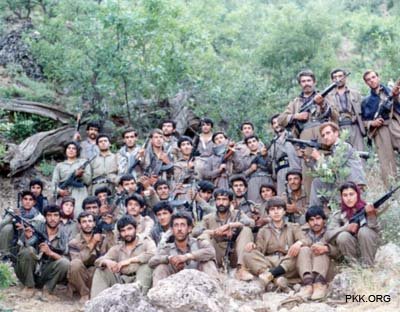
On Turkish television Turkey's Foreign Minister Abdullah Gul, announced Turkey has received pledges of support in its struggle against the Kurdish "Marxist" group PKK (Turkey's Kurdish Workers Party) from Damascus and Tehran.
The PKK revolt centered in the Turkish city of Diyarbakir started in 1984. Since that time 37,000 people have perished in the fighting. The most recent fighting is unique, is that Turkey has received the support of neighboring countries. They plan to also negotiate with the Baghdad.
Syria and Iran also face the possibility of revolt of their Kurdish populations. They also harbor dreams of a united Kurdistan. The Kurdish population in Northern Iraq, actually have some degree of autonomy. They have been aiding the Kurdish in Turkey, financially, and by giving refuge to PKK fighters.
If Kurdistan became independant; it would carve up borders in Iran, Iraq, Syria, Turkey, and the Caucasus State. It would be greater than any of the "color revolutions" in Ukraine and Georgia. Energy agreements would have to be renegotiated. It could inspire other national groups to revolt.
Ankara has been making serious military alliances, particularly since Kurdish in Northern Iraq, negotiated an oil deal with Norway, independant of Baghdad.
Islamic units fighting against Kurdish independance, can provide a diversion from their fighting the West, Russia or Israel. Allies may convince the Kurdish, that independance is reachable.
Recently US intelligence and Turkey, have been working against the PKK in Turkey. It is geared to eliminating the PKK's influence in Northern Iraq.
RENEGADE EYE
Thursday, April 06, 2006
Hitchens On The Third Anniversary of the Iraq War And Occupation
Reason Magazine and Slate, had opinions by Christopher Hitchens, on the third anniversary of the Iraq occupation.
ReasonOnline at 03/17/06, asked several conservative and libertarian writers, if they changed their mind about the Iraqi occupation. They were all asked the same three questions. This is Hitchens response:
1. Did you support the invasion of Iraq?
Yes: I was an advocate before the fact, not a supporter.
2. Have you changed your position?
Not in the least: I wish only that Saddam had not been able to rely upon Russian and French protection and the influence of oil-for-food racketeers and other political scum.
3. What should the U.S. do in Iraq now?
The United States and its allies should continue to stand for federal democracy, while making Iraq a killing-field for jihadists and fascists and a training ground for an army that will need to intervene again in other failed state/rogue state contexts.
As for the second point, I have some memory of a third party, that had something to do with the oil for food program. Iraqi people are facing more hardship, now that the oil for food program is being discontinued.
My reaction to the third point, is to tell Hitchens, the joke is on you. I believe some neocons and Bush, authentically entered this situation with a sense of idealism. Days after the invasion of Iraq, the idealism ended. The neocons were heard from less. The world view of Cheney and Rumsfeld prevailed. The US's best friends are Saudi Arabia, Pakistan and Israel. All US imperialism wants to do is contain Islamism. Islamism is similar to imperialism, as both based on profit and reaction.
The March 20th Slate, has Hitch again telling us about Iraq.
Up until now, I have resisted all urges to assume the mantle of generalship and to describe how I personally would have waged a campaign to liberate Iraq.
Not quite true. I can live with that statement.
This commitment doesn't override truth, and I know that a lot of people feel that they were cheated or even lied into the war. It seems amazing to me that so many people have adopted the "Saddam Hussein? No problem!" view before the documents captured from his regime have even been translated, let alone analyzed. I am sure that when this task has been completed, history will make fools of those who believed that he was no threat, had no terror connections, was "in his box," and so forth. A couple of recent disclosures lend some point to my view. The first are the findings published in the most recent issue of Foreign Affairs, and the second is the steady work of Stephen Hayes, over at the Weekly Standard, aimed at getting some of the captured documents declassified.
Things changed from Saddam had WMD, to he had intentions, to we have documents that say something.
Well, if everyone else is allowed to rewind the tape and replay it, so can I. We could have been living in a different world, and so could the people of Iraq, and I shall go on keeping score about this until the last phony pacifist has been strangled with the entrails of the last suicide-murderer.
What the hell is that supposed to mean?? Maybe he means,“Mankind will not be free until the last king is stranged with the entrails of the last priest"- Diderot.
Hitchens announced he is part of the ACLU lawsuit against wiretaps. He announced it at Huffington's blog. Why not announce it in The Wall Street Journal or Reason? Shouldn't the Huff and Puff people be strangled?
This post represents an obvious direction change. The process of blogging, not only changes readers of blog, it changes writers. My initial support of the Iraq invasion, wasn't based on support of the invasion, as much as not being able to identify with the stupid arguments brought by the Democratic Party.
I like Maryam Namazie's blog. Her party with branches in Iraq and Iran, are unequivocally against both Islamism and occupation. I love Edie's blog Annotated Life. Read her articles about the history of neoconservativism and Islamism.
RENEGADE EYE
ReasonOnline at 03/17/06, asked several conservative and libertarian writers, if they changed their mind about the Iraqi occupation. They were all asked the same three questions. This is Hitchens response:
1. Did you support the invasion of Iraq?
Yes: I was an advocate before the fact, not a supporter.
2. Have you changed your position?
Not in the least: I wish only that Saddam had not been able to rely upon Russian and French protection and the influence of oil-for-food racketeers and other political scum.
3. What should the U.S. do in Iraq now?
The United States and its allies should continue to stand for federal democracy, while making Iraq a killing-field for jihadists and fascists and a training ground for an army that will need to intervene again in other failed state/rogue state contexts.
As for the second point, I have some memory of a third party, that had something to do with the oil for food program. Iraqi people are facing more hardship, now that the oil for food program is being discontinued.
My reaction to the third point, is to tell Hitchens, the joke is on you. I believe some neocons and Bush, authentically entered this situation with a sense of idealism. Days after the invasion of Iraq, the idealism ended. The neocons were heard from less. The world view of Cheney and Rumsfeld prevailed. The US's best friends are Saudi Arabia, Pakistan and Israel. All US imperialism wants to do is contain Islamism. Islamism is similar to imperialism, as both based on profit and reaction.
The March 20th Slate, has Hitch again telling us about Iraq.
Up until now, I have resisted all urges to assume the mantle of generalship and to describe how I personally would have waged a campaign to liberate Iraq.
Not quite true. I can live with that statement.
This commitment doesn't override truth, and I know that a lot of people feel that they were cheated or even lied into the war. It seems amazing to me that so many people have adopted the "Saddam Hussein? No problem!" view before the documents captured from his regime have even been translated, let alone analyzed. I am sure that when this task has been completed, history will make fools of those who believed that he was no threat, had no terror connections, was "in his box," and so forth. A couple of recent disclosures lend some point to my view. The first are the findings published in the most recent issue of Foreign Affairs, and the second is the steady work of Stephen Hayes, over at the Weekly Standard, aimed at getting some of the captured documents declassified.
Things changed from Saddam had WMD, to he had intentions, to we have documents that say something.
Well, if everyone else is allowed to rewind the tape and replay it, so can I. We could have been living in a different world, and so could the people of Iraq, and I shall go on keeping score about this until the last phony pacifist has been strangled with the entrails of the last suicide-murderer.
What the hell is that supposed to mean?? Maybe he means,“Mankind will not be free until the last king is stranged with the entrails of the last priest"- Diderot.
Hitchens announced he is part of the ACLU lawsuit against wiretaps. He announced it at Huffington's blog. Why not announce it in The Wall Street Journal or Reason? Shouldn't the Huff and Puff people be strangled?
This post represents an obvious direction change. The process of blogging, not only changes readers of blog, it changes writers. My initial support of the Iraq invasion, wasn't based on support of the invasion, as much as not being able to identify with the stupid arguments brought by the Democratic Party.
I like Maryam Namazie's blog. Her party with branches in Iraq and Iran, are unequivocally against both Islamism and occupation. I love Edie's blog Annotated Life. Read her articles about the history of neoconservativism and Islamism.
RENEGADE EYE
Tuesday, April 04, 2006
Wishing Tina's Baby All The Best
Tina from the blog fuzzy and blue --political musings by a proud Democrat baby girl, is having a major eye surgery on Wednesday. If you read her blog, you'll find she is a person of substance. I always tell her, the Democratic Party, doesn't deserve having her. Go to her blog, and write her a note.RENEGADE EYE
Thursday, March 30, 2006
Target Cuba and Venezuela: US Military Exercises in the Caribbean

According to a press release by US Southern Command, on March 27, 2006; a US Navy Carrier Strike Group, will deploy from the US east coast to the Caribbean Sea from early April to late May 2006. It will consist of four ships, with 60 fighter planes, and 6,500 troops.
The stated reasons are; "enhancing military-to-military relationships with regional partner nations, improving operational readiness, and fostering good will." By "fostering good will" what is meant is sending a strong message to Venezuela and Cuba. The commander of the US Southcom General Bantz Craddock, has on many occasions attacked Venezuela. Two weeks ago to the US Senate, he called Venezuela, "a destabilizing force".
The US is bogged down in Iraq, and has no immediate plans to invade Venezuela, it certainly is on the table for future plans.
SEE: In Defense of Marxism
RENEGADE EYE
I WAS TAGGED AGAIN
The Blogworld as I know it changed this evening... I've been tagged! It was inevitable... you blog... you become friends with fellow bloggers.... and ZONK!!! they get you when you're not looking.
El Patro's Tijuana Tortilla did it to me... So now I'm obligated to tag four others....
But first I have to answer the following questions... then I'll name the four I'm tagging. They will have to answer the same questions... and tag four other bloggers. This should be done on their own site... but link me to it when you do...
So... here goes... the questions; I chose to rewrite the questions El Patro sent, due to I was tagged just recently.
1) What are your guilty pleasures??
Professional wrestling and romantic comedy movies.
2) What song is your theme song?
"Ring of Fire"
3) You receive $20.00 change in a retail store. The correct change is
$1.00. What do you do?
I already gave back the 20.
4) You know your friend's husband has another lover. Tell wifey?
No, I'll end up with two enemies.
5) Who do you admire, that would surprise others?
I think Clint Eastwood is one of the greatest artists in history.
OK, so time to tag 4 other people. Well, here goes, and everyone check these blogs out, they’re all great..
Blurred Clarity
CLAY CANE
Folk Rock Girl (FRoG BLoG)
jaebrysonblog
El Patro's Tijuana Tortilla did it to me... So now I'm obligated to tag four others....
But first I have to answer the following questions... then I'll name the four I'm tagging. They will have to answer the same questions... and tag four other bloggers. This should be done on their own site... but link me to it when you do...
So... here goes... the questions; I chose to rewrite the questions El Patro sent, due to I was tagged just recently.
1) What are your guilty pleasures??
Professional wrestling and romantic comedy movies.
2) What song is your theme song?
"Ring of Fire"
3) You receive $20.00 change in a retail store. The correct change is
$1.00. What do you do?
I already gave back the 20.
4) You know your friend's husband has another lover. Tell wifey?
No, I'll end up with two enemies.
5) Who do you admire, that would surprise others?
I think Clint Eastwood is one of the greatest artists in history.
OK, so time to tag 4 other people. Well, here goes, and everyone check these blogs out, they’re all great..
Tuesday, March 28, 2006
SUPPORT PAKISTANI BLOGGERS

As you all know that the Pakistani govt. banned all blogs hosted on
blogspot through its internet gateway. An action group was formed by the
Pakistani bloggers to voice their concerns to the media regarding this
issue (http://groups.google.com/group/AGABBIP). As of 27th Feb, all web
logs having an address with .http://name.blogspot.com went offline in
Pakistan.An alternative to the current blogspot ban is to access you blogs
by http://www.pkblogs.com/
Dr. Awab Alvi (a blogger from Karachi) started a campaign "Dont Block the
Blog" which offers website banners to protest the ban.
(http://help-pakistan.com/main/dont-block-the-blog/)
Additionally, many bloggers have also gathered at various fronts to
protest the ban by sending group petitions to the government and raising
the issue with the media.
Sign the petition.
Reprinted from the Pakistani blog My Red Diary.
RENEGADE EYE
Subscribe to:
Posts (Atom)